



Hello There!

Pixel Theory is a growth partner and online advertising agency.

Follow Us

P I X E L T H E O R Y

Black Friday 2025: The $11.8 Billion Illusion

Consumer Growth Partners

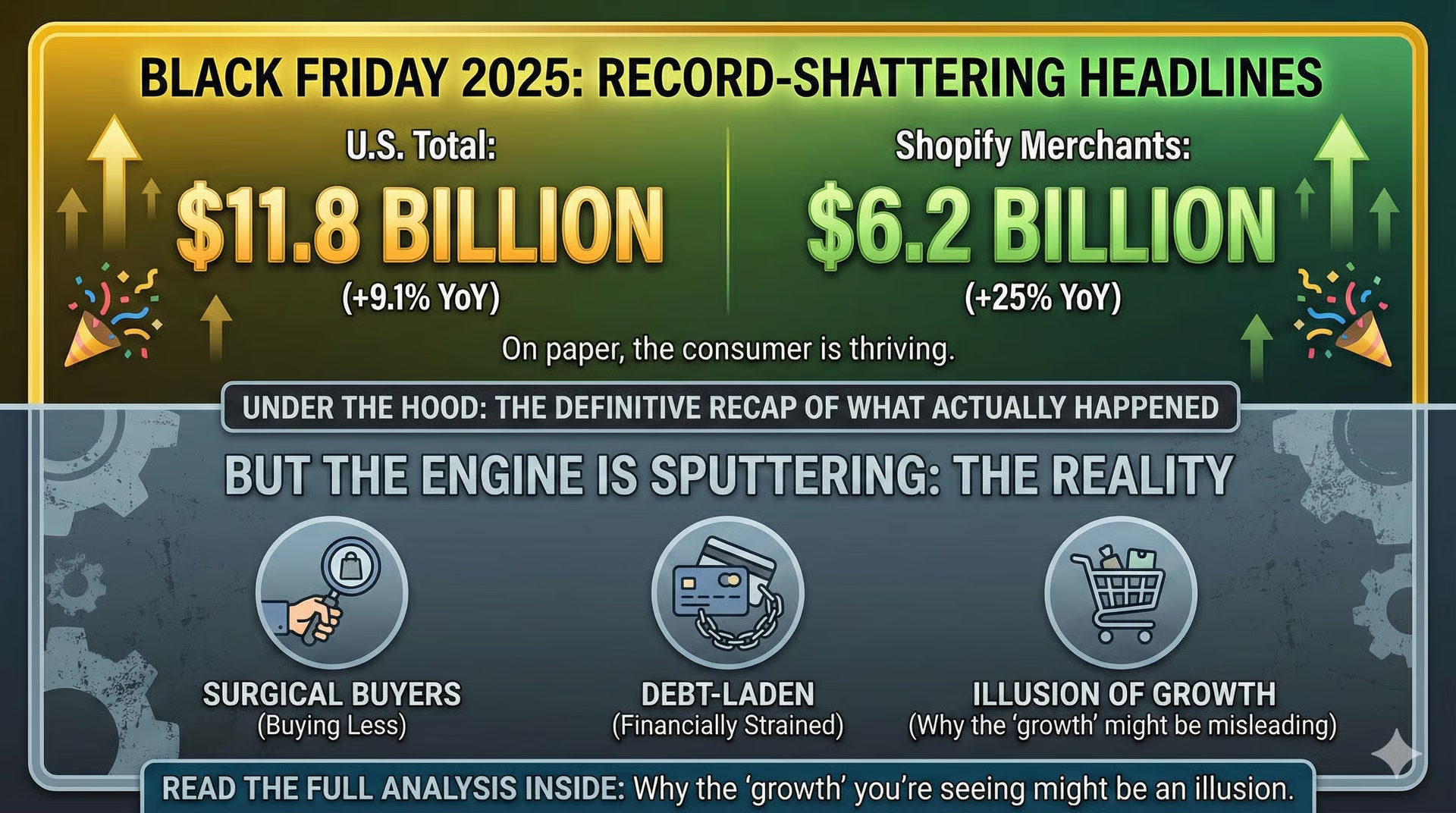
Black Friday 2025 just shattered records. But if you look under the hood, the engine is sputtering.

The headlines are celebrating an $11.8 Billion day in the U.S. (+9.1% YoY). Shopify merchants alone processed $6.2 Billion (+25% YoY).

On paper, the consumer is thriving. In reality, they are “surgical,” debt-laden, and buying less.

Here is the definitive recap of what actually happened last week—and why the “growth” you’re seeing might be an illusion.

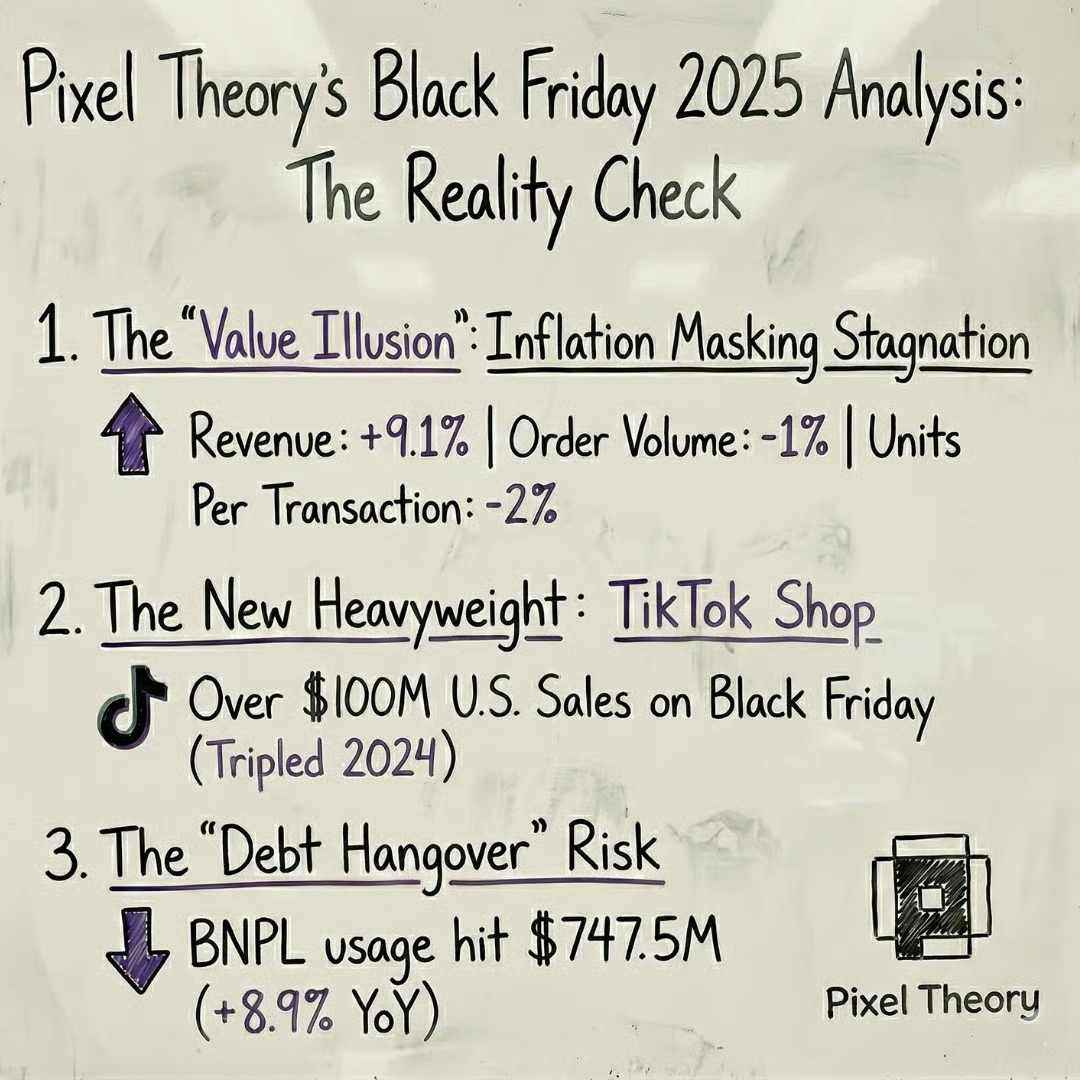
1. The “Value Illusion”: Inflation Masking Stagnation

This is the most critical insight for every founder and operator.

While top-line revenue soared, unit volume dropped.

  • Revenue: Up +9.1%
  • Order Volume: Down -1%
  • Units Per Transaction: Down -2%

The growth wasn’t driven by consumption; it was driven by price. The Average Selling Price (ASP) rose 7%. Consumers spent more money to acquire fewer goods.

The takeaway: If your revenue is up but your unit volume is flat, you aren’t growing. You’re just riding inflation.

2. The New Heavyweight: TikTok Shop

If 2024 was the arrival, 2025 was the coronation.

TikTok Shop generated over $100 million in sales in the U.S. on Black Friday alone—tripling its 2024 performance.

We witnessed a structural shift: social commerce moved from “discovery” to “conversion.” This wasn’t just viral dropshippers; legacy brands like Crocs, Fenty Beauty, and Medicube dominated the feed.

For DTC brands, the signal is clear: If you don’t have a TikTok Shop strategy for 2026, you are leaving 20%+ of your potential revenue on the table.

3. The “Debt Hangover” Risk

How did cash-strapped consumers fund this record spend? Debt.

Buy Now, Pay Later (BNPL) usage hit $747.5 million on Black Friday (+8.9% YoY).

This creates a massive risk for Q1. The consumer is borrowing from their future self. Expect a “spending hangover” in January as bills come due.

Strategic Learnings for Q1 2026

Consumer Growth Partners

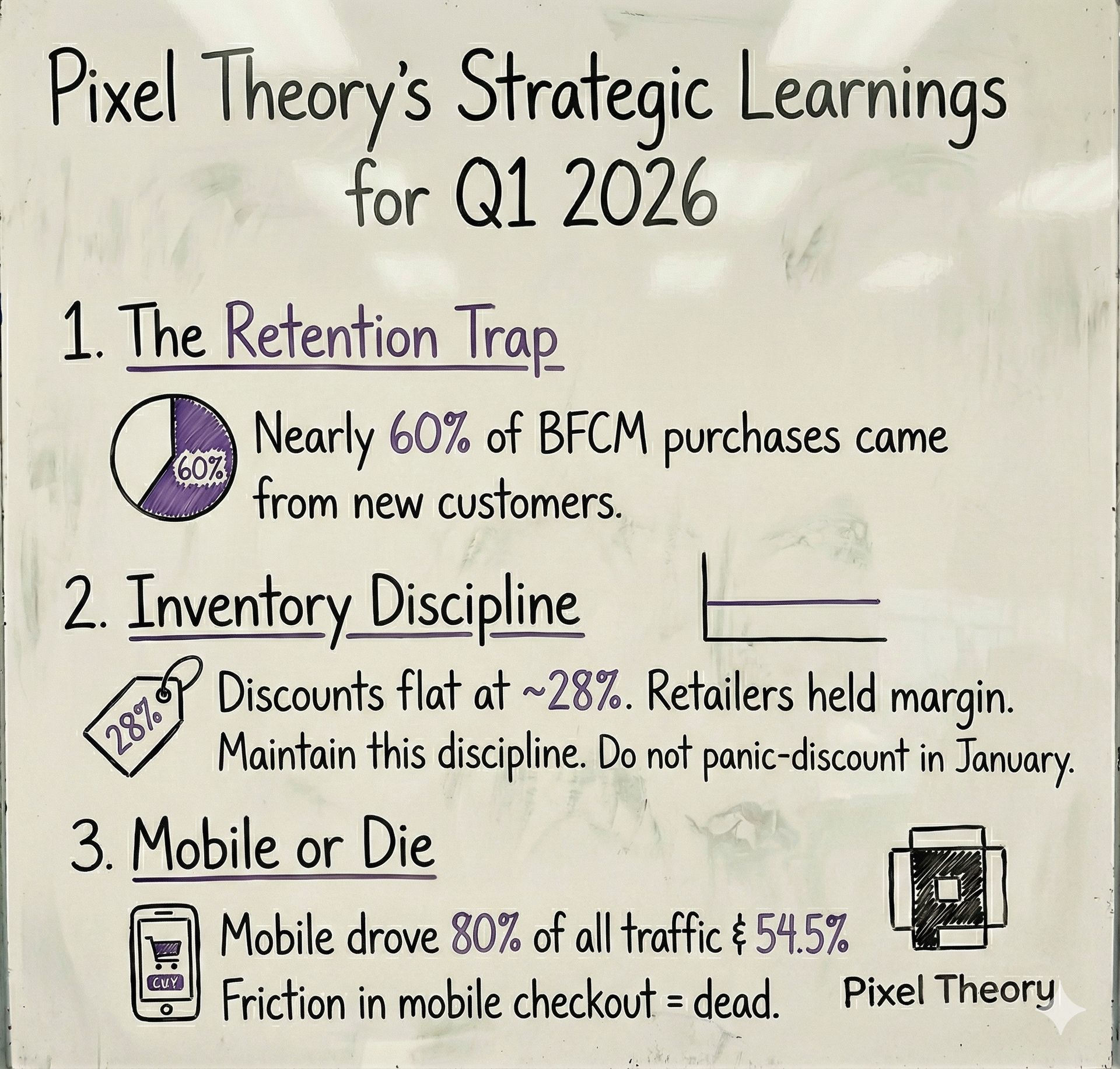
  • The Retention Trap: Nearly 60% of BFCM purchases came from new customers. Your primary goal for Q1 must be LTV. Segment these buyers immediately. If you don’t have a second-purchase flow ready, you will bleed CAC.
  • Inventory Discipline: Discounts remained flat at ~28%. Retailers held the line on margin. Maintain this discipline. Do not panic-discount in January unless you are sitting on dead stock.
  • Mobile or Die: Mobile drove 80% of all traffic and 54.5% of sales. If your mobile checkout has friction, you’re dead.

Black Friday 2025 proved the consumer is still spending, but they are doing it with surgical precision. The “easy money” era of arbitrage is over.

Efficiency and retention are now the only metrics that matter.

What to expect looking ahead to 2026

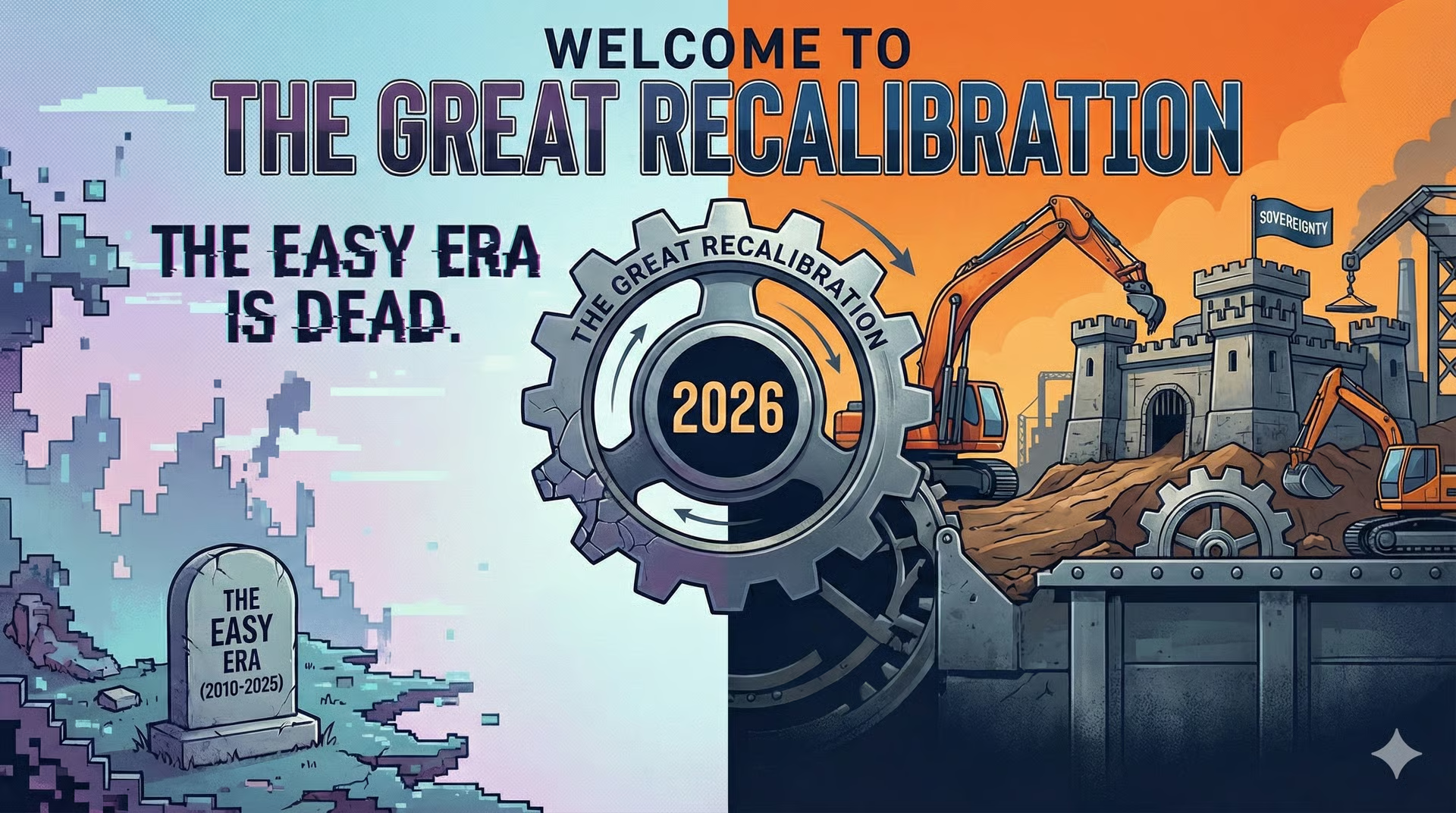
We have entered what I’m calling “The Great Recalibration.” The frictionless growth of the digital age has slammed into the hard friction of reality. In 2026, you can no longer rent your distribution, rent your logistics, or rent your solvency from a VC.

The mandate for 2026 is Sovereignty.

I just went deep into the strategic outlook for the next 18 months. Here is the executive briefing on how the physics of commerce are changing and how you need to rebuild your operating manual.

1. The Supply Chain: Tariffs Are Not a “Bug”

Stop waiting for tariffs to go away. They aren’t a geopolitical bargaining chip anymore; they are a revenue engine for the government.

Projections show customs duties will hit $60.3 billion in 2026. That is a massive line item in the national budget. When protectionism becomes a revenue stream, it becomes permanent.

The Operator’s Move:

  • Kill the “De Minimis” Dream: If your business model relies on the Section 321 loophole (shipping goods under $800 duty-free), you are walking on a landmine. Regulation is coming to close this gap.

  • Adopt “China Plus N”: The “China Plus One” strategy is outdated. You need a networked approach. Vietnam is congested, and Mexico is great for speed but lags in precision engineering. You need a portfolio, not a single alternative.

  • Inventory Shift: We are moving from Just-in-Time (JIT) to Just-in-Case (JIC). You can’t afford to run lean when supply chains are fractured.

  • Check Out Evana: The import duty optimization platform that is unlocking refunds for brands like Kenny Flowers, MeUndies, SquattyPotty and hundreds of other top Shopify & Amazon brands.

2. The Financial Reset: EBITDA is King

For years, we valued brands on a multiple of revenue. “Oh, you’re doing $10M top line? You’re worth $50M.”

In 2026, that math is obsolete. The market has reverted to the historical norm: Cash is reality.

Valuations have shifted decisively to EBITDA. A brand doing $50M in revenue with negative earnings is no longer a “unicorn” it’s a distressed asset.

The New Scoreboard:

Forget ROAS. It’s a platform-biased metric that lies to you. Your new North Star is Contribution Margin 3 (CM3).

CM3 = Net Revenue – (COGS + Fulfillment + Payment Processing + Variable Ad Spend + Variable OpEx)

If your CM3 isn’t hitting 20-30%, you don’t have a growth problem; you have a business model problem.

3. The “Anti-Algorithm” Movement

Here is the scary part for marketers: The algorithm is losing its juice.

Consumers are facing a “Trust Deficit.” They know the feed is manipulated, so they are retreating to “Dark Social” group chats, Discords, and Slack communities where pixels can’t track them.

While humans leave the feed, AI Agents are entering.

We are seeing the rise of “Agentic Commerce.” This is where a consumer tells an AI: “Buy me running shoes under $150 that are good for high arches.” The AI executes the transaction.

The Play:

  • SEO for LLMs: If ChatGPT or Perplexity can’t “read” your product specs via structured data, you are invisible.

  • Build “Third Places”: Since digital is noisy, the new luxury is offline community. Brands like Maia Active and Rothy’s are winning by hosting run clubs and pizza parties—building “brand glue” in the real world.

4. The Consumer: Trading Down & Splurging Up

The middle is dead.

We are seeing a massive bifurcation in spending. Consumers are trading down on essentials (buying private label paper towels) so they can splurge up on emotional goods (premium wellness, experiences).

If you are a “mid-priced, average quality” brand, you are in the death zone. You either need to be the cheapest option or the absolute coolest option.

The Takeaway: Build a Sovereign Brand

The winners of 2026 won’t be the ones who arbitrage cheap ads. They will be the “Full Stack” operators.

They will own their audience (email/SMS/print) so they aren’t renting from Meta.

They will own their supply chain so they aren’t destroyed by a single tariff.

They will own their financials by optimizing for profit, not just revenue.

The rising tide is gone. It’s time to learn how to swim.