



Hello There!

Pixel Theory is a growth partner and online advertising agency.

Follow Us

P I X E L T H E O R Y

How a Hungover Beach Bet Built the LVMH of Food: The MASA Story

In 2024, the global snack food market was valued at more than USD 534 billion, according to Statista. This shows how large and competitive the category has become. Yet even in such a crowded space, new brands can rise quickly when they combine a strong identity with a clear strategy. The story of MASA and Pixel Theory is one such example. What began as a simple conversation on a beach turned into a brand many now describe as the LVMH of food brands.

MASA did not start with a complex business plan. It started with a problem. The founders were frustrated with modern snacks filled with industrial seed oils and artificial ingredients. They believed there was space for something better. Instead of creating another low-cost product, they chose to build a premium brand from the beginning. That decision shaped everything that followed.

Building a Product with Clear Intent

First, MASA focused on the product itself. The brand chose organic corn, sea salt, and beef tallow as core ingredients. These beef tallow potato chips stood apart from common supermarket options. At a time when many consumers were questioning seed oils, MASA positioned itself among luxury seed oil-free snacks.

However, the product alone was not enough. Many brands claim to be clean or natural. MASA added depth by using traditional nixtamalisation, an old method of preparing corn. This technique gave the chips better texture and flavour. More importantly, it gave the brand a story rooted in heritage and craft.

As a result, MASA became known as one of the premium ancestral snack brands in the market. The simplicity of the ingredient list worked in its favour. Consumers could understand it easily. There was no confusion and no long explanation needed.

From Product to Identity

Although quality mattered, identity mattered even more. The founders understood that to become the LVMH of food brands, they had to move beyond product features. They had to create meaning.

Therefore, they built a brand that felt elevated. The packaging was thoughtful. The visuals were clean. The tone was confident but not loud. Each detail suggested care and intention. This approach reflected a wider shift in high-end CPG branding, where design and culture shape perception as much as ingredients do.

In addition, MASA did not try to appeal to everyone. Instead, it focused on a specific group of consumers who value quality and are willing to pay for it. By narrowing the audience, the brand strengthened loyalty. Customers felt part of something distinctive.

This is a key part of a cult food brand strategy. A cult brand does not chase mass approval. It builds a strong connection with a defined group. Over time, that group grows through word of mouth and community.

Strategic Decisions That Changed the Game

At first, MASA faced resistance from traditional manufacturers. Some partners did not believe in cooking chips in beef tallow at scale. Rather than change the product to fit existing systems, the founders invested in their own production process.

This decision gave them full control. It also protected product quality. Most importantly, it reinforced the brand promise. When a company owns its process, it can innovate faster and respond to demand without compromise.

Later, growth required a different kind of discipline. Scaling a premium product is not simple. Advertising must reflect the brand’s position. Pricing must protect margin. Distribution must expand without weakening identity.

This is where performance-driven growth becomes critical. A brand that aims to become the LVMH of food brands cannot rely only on creative storytelling. It must measure results carefully. Customer acquisition cost, repeat purchase rate, and lifetime value all matter.

Growth partners such as Pixel Theory work with brands at this stage. Their approach combines data, creative testing, and clear financial focus. Instead of looking only at clicks or impressions, they study contribution margin and sustainable scale. This aligns marketing with real business outcomes.

Lessons for Ambitious Founders

The MASA story offers practical lessons for founders who want to build lasting brands.

  • First, clarity wins. A short ingredient list and a simple message can be powerful when they are authentic.
  • Second, pricing should reflect value. High-end CPG branding requires confidence. If a product is premium, the price should support that position.
  • Third, culture drives growth. Luxury seed oil-free snacks succeed not only because they avoid certain ingredients but because they represent a lifestyle choice.
  • Finally, data support creativity. Cult food brand strategy is emotional, yet it must be supported by numbers. Brands that track performance closely can scale without losing focus.

These principles apply beyond snacks. Whether the category is beauty, beverage, or wellness, the path to becoming the LVMH of food brands follows similar patterns. Strong identity, product excellence, operational control, and disciplined growth all work together.

Why the MASA Model Matters Today

Consumers are more informed than ever. They read labels. They compare brands online. They expect transparency. As a result, superficial branding no longer works. Premium ancestral snack brands must prove their claims through action.

MASA succeeded because it aligned every element of the business. The product, the story, and the operations supported one clear idea. That consistency builds trust. Over time, trust becomes loyalty.

Moreover, the snack market remains highly competitive. According to Statista, global demand continues to rise. Therefore, opportunity still exists. However, only brands with distinct positioning and disciplined execution will stand out.

This is why the concept of the LVMH of food brands resonates. It signals a portfolio of premium names that shape culture rather than follow it. It represents long term brand building rather than short-term trends.

Conclusion

A casual conversation on a beach led to the creation of a brand that now challenges the snack industry. Through simple ingredients, a strong identity, and careful scaling, MASA positioned itself among luxury seed oil-free snacks and premium ancestral snack brands. Its beef tallow potato chips became a symbol of quality and intention.

For founders and marketing leaders, the lesson is clear. To build the LVMH of food brands, you must combine product integrity with high-end CPG branding and disciplined growth. Cult food brand strategy is not accidental. It is designed.

Ready to build the LVMH of your category?

Book a free growth call and engineer your cult brand.

FAQs

Q 1. What does LVMH of food brands mean?

Ans. The phrase refers to a group of premium food companies that hold strong brand equity, cultural influence, and pricing power. Sim ilar to luxury groups in fashion, these brands focus on quality, storytelling, and long-term value rather than mass production alone.

Q 2. Why are luxury seed oil-free snacks gaining popularity?

Ans. Many consumers are paying closer attention to ingredients. As awareness grows around seed oils and processing methods, products that offer simple and traditional alternatives attract interest. Luxury seed oil-free snacks combine ingredient clarity with premium positioning.

Q 3. How do beef tallow potato chips differ from regular chips?

Ans. Beef tallow potato chips are cooked in animal fat rather than vegetable or seed oils. This can create a different texture and flavour profile. In addition, the choice of fat supports a traditional and ancestral approach to food preparation.

Q 4. What is a cult food brand strategy?

Ans. Cult food brand strategy focuses on building deep loyalty within a specific audience. Instead of appealing to everyone, the brand develops a strong identity, consistent messaging, and meaningful community engagement. Over time, this creates advocacy and repeat purchases.

Q 5. How can high-end CPG branding support growth?

Ans. High-end CPG branding allows a product to command higher prices and stronger loyalty. When combined with clear financial tracking and performance marketing, it supports sustainable scaling. This balance of brand and data is essential for long-term success. 
Why Expo West 2026 Is the Super Bowl of CPG Brands

Natural Products Expo West is widely known as the largest trade show for natural and organic consumer products. According to the official website, the event brings together more than 60,000 industry professionals and over 3,000 exhibitors each year. 

This scale alone explains why Expo West 2026 CPG trends will strongly influence how brands plan their next moves.

For companies in the consumer packaged goods sector, this event is more than an exhibition. It is a place where strategy, innovation, and growth planning come together. In many ways, it works like the Super Bowl for CPG brands because it sets the direction for the year ahead.

Why Expo West Matters for the Industry

Every year, Natural Products Expo West gathers founders, marketing leaders, buyers, investors, and service providers under one roof. As a result, it becomes a central meeting point for decision makers. Brands do not only showcase products. They also study competitors, observe category shifts, and understand where consumer demand is moving.

In addition, keynote sessions and expert panels highlight CPG industry trends for 2026 that will shape product development and marketing strategies. Therefore, businesses that attend gain early access to insights that others may discover much later.

Because the event focuses on natural and wellness categories, it also reflects broader changes in health, sustainability, and transparency. These themes are no longer niche topics. Instead, they are core expectations from modern consumers.

Expo West 2026 CPG Trends to Watch

Expo West 2026 CPG trends are expected to focus on innovation, technology, and long-term brand value. Several areas are already gaining attention across the market.

1. CPG innovation and AI

Technology is becoming a strong driver of product development and marketing. Many brands are now using data tools to understand buying behaviour and predict demand. As a result, CPG innovation and AI are shaping how products are created, priced, and promoted.

At Expo West 2026, discussions around automation, predictive analytics, and personalised marketing are likely to grow. These tools help brands:

  • Identify new product opportunities faster
  • Improve demand forecasting
  • Refine audience targeting in consumer packaged goods marketing

Therefore, companies that adopt data-led strategies will have a stronger competitive position.

2. Wellness product trends

Wellness remains a major growth area. However, consumers now expect more than simple health claims. They look for proof, transparency, and functional benefits.

Wellness product trends for 2026 may include:

  • Products that support gut health and immunity
  • Clean label ingredients with clear sourcing
  • Functional snacks and beverages with added benefits

Because Expo West attracts emerging and established wellness brands, it becomes a live preview of what will appear on retail shelves in the coming year.

3. Regenerative organic certification and sustainability

Sustainability is moving beyond basic environmental claims. Increasingly, brands are exploring regenerative organic certification to show their commitment to soil health and responsible farming.

This shift is important because consumers want brands to take measurable action. Therefore, certifications and verified standards help build trust. At Natural Products Expo West, sustainability stories often play a central role in brand positioning.

In addition, packaging innovation and supply chain transparency continue to gain importance. These factors directly influence purchasing decisions.

What Are the Trends for FMCG in 2026?

Many leaders ask, what are the trends for FMCG in 2026? The answer lies in the combination of health, technology, and purpose.

Firstly, data-driven decision-making will shape product launches and marketing campaigns. Secondly, wellness-focused products will continue to grow. Thirdly, brands that communicate clear values will attract loyal customers.

Expo West 2026 CPG trends will reflect all three of these shifts. Therefore, businesses that monitor this event carefully can align their strategies with future demand.

What Are the CPG Trends for 2026?

When considering what the CPG trends for 2026 are, several themes stand out.

  • Greater use of CPG innovation and AI in planning and promotion
  • Expansion of wellness product trends across categories
  • Stronger emphasis on regenerative organic certification
  • More targeted consumer packaged goods marketing

These trends are not isolated. Instead, they work together. For example, data tools help brands communicate sustainability claims more effectively. Similarly, wellness messaging becomes stronger when backed by research and transparent sourcing.

How Pixel Theory Supports Growth-Focused Brands

At Pixel Theory, the focus remains on measurable performance and strategic clarity. The team works with ambitious brands that want to grow in competitive markets. Because the CPG space is evolving quickly, brands need more than creative campaigns. They need structured growth systems.

Pixel Theory supports consumer packaged goods marketing through data analysis, audience insights and performance optimisation. As Expo West 2026 CPG trends highlight innovation and technology, this approach becomes even more relevant.

Moreover, Pixel Theory understands that visibility at events like Natural Products Expo West must translate into long-term results. Therefore, strategies are built around conversion, retention and sustainable brand growth.

By aligning marketing efforts with CPG industry trends 2026, brands can move from exposure to measurable revenue impact.

Why Expo West 2026 Is a Strategic Moment

Expo West is not only about product displays. It is about understanding direction. Brands observe category growth, investor interest and retail behaviour. They also test messaging and gather feedback directly from industry stakeholders.

Because so many leaders attend, decisions made during and after the event often influence the entire year. In this way, Expo West 2026 CPG trends become a reference point for planning cycles.

For brands that want to stay competitive, participation is a strategic choice rather than a marketing exercise.

Let’s Connect at Expo West

If you are attending Natural Products Expo West and want to align your strategy with emerging CPG industry trends for 2026, this is the right time to act.

Let’s Connect at Expo West.

Book a Quick Chat to explore how Pixel Theory can help transform insight into structured growth and stronger market performance.

Frequently Asked Questions

Q 1. What is Natural Products Expo West?

Ans. Natural Products Expo West is an annual trade show focused on natural, organic and healthy consumer products. It brings together brands, retailers, investors and service providers. The event serves as a platform for product launches, networking and industry education. Because of its size and influence, it plays a key role in shaping Expo West 2026 CPG trends.

Q 2. Why is Expo West important for CPG brands?

Ans. Expo West provides early insight into CPG industry trends for 2026. Brands can observe competitor strategies, discover innovation patterns and build retail relationships. In addition, educational sessions offer guidance on consumer packaged goods marketing and operational improvement. Therefore, attendance can support both short-term visibility and long-term planning.

Q 3. What are the CPG trends for 2026?

Ans. The main CPG industry trends 2026 include stronger adoption of CPG innovation and AI, growth in wellness product trends, and increased focus on regenerative organic certification. Data-driven marketing and sustainability transparency are also expected to shape brand strategies.

Q 4. How does AI influence CPG innovation?

Ans. CPG innovation and AI support product forecasting, consumer analysis and campaign optimisation. Through data tools, brands can identify demand patterns and refine messaging. As a result, decision-making becomes more precise and efficient.

Q 5. How can Pixel Theory help brands after Expo West?

Ans. Pixel Theory helps brands convert market insights into structured growth plans. By aligning strategies with Expo West 2026 CPG trends and broader CPG industry trends 2026, the team focuses on measurable results. This includes performance analysis, audience targeting, and long-term marketing optimization.

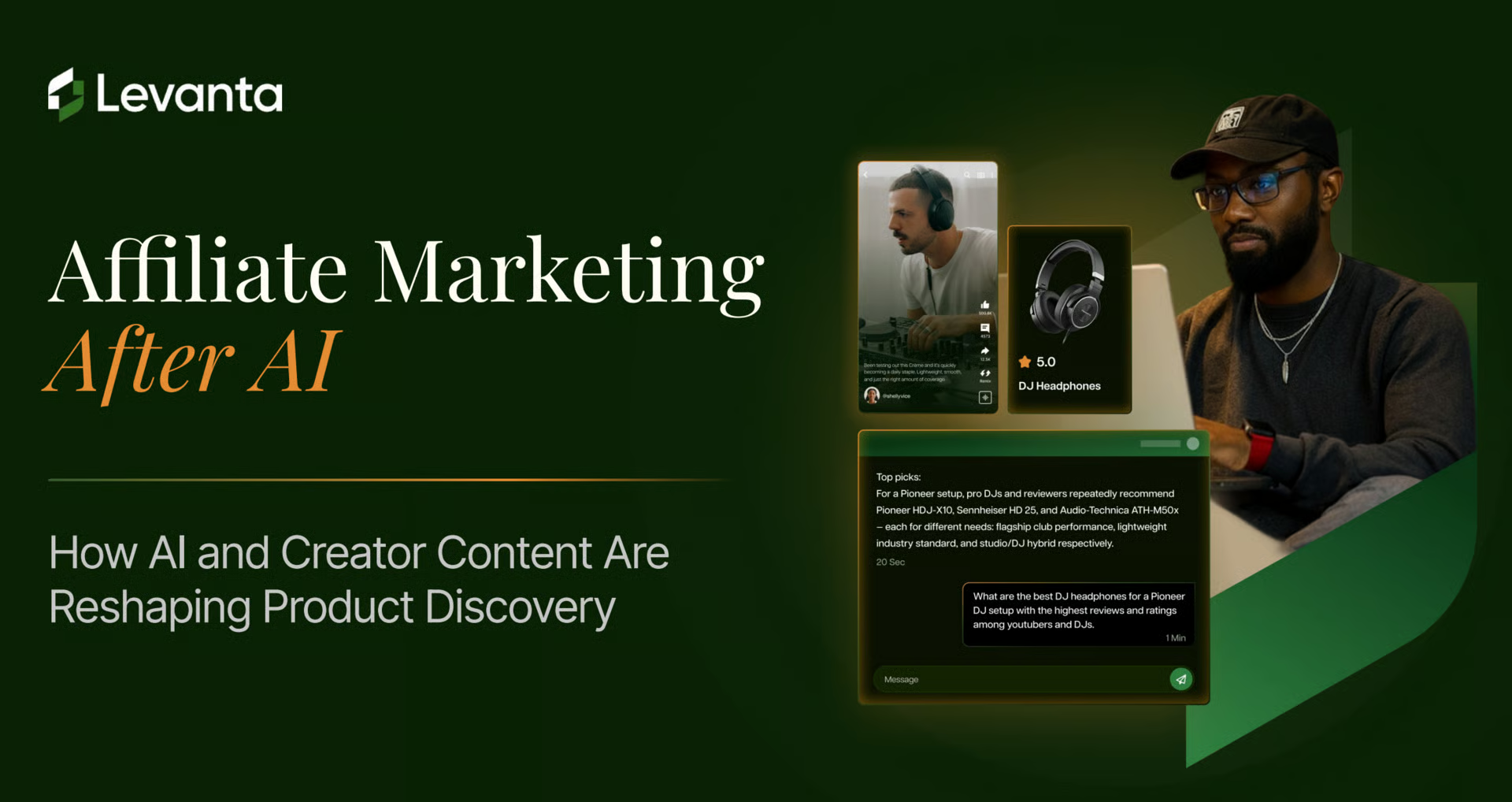
The “AI Revolution” Has a 9.6% Click-Rate

Everyone is obsessed with the idea of an AI-driven sales funnel. The only problem? It’s not working.

A new 2025 consumer report from Levanta just dropped, and it’s a bombshell for anyone in CPG.

While 100% of the consumers in their study are using AI for product research, less than 10% (9.6%) actually click an AI-recommended link.

So, if they’re not clicking on the AI, where are they going?

They’re going to find a human.

After using AI to get a list of options, here’s what shoppers actually do next:

  • 27% immediately go search on a marketplace (like Amazon).
  • 25.4% go to a search engine (to find reviews).
  • 16.6% specifically look for a “real person review”.

AI is the research assistant, not the salesperson. Consumers are using it to filter the noise, then immediately seeking human validation before they buy.

If you want to see the full dataset behind this…

Get access to the full report here

We Still Trust People More Than Algorithms

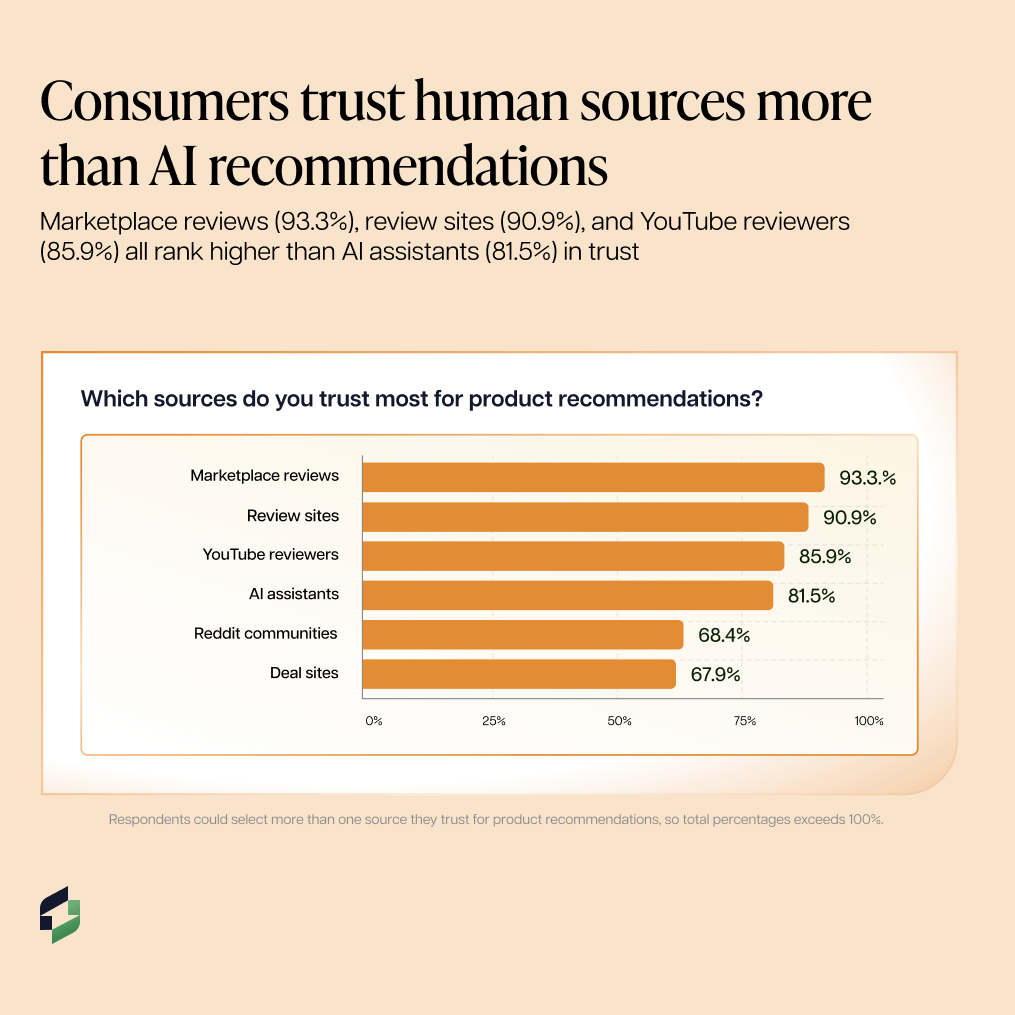
The data is clear: trust is still built by humans. When asked who they really trust for product recommendations, the hierarchy is obvious:

  1. Marketplace Reviews: 93.3% trust
  2. Review Sites: 90.9% trust
  3. YouTube Reviewers: 85.9% trust
  4. AI Assistants: 81.5% trust

And what kind of “human validation” are they looking for? Video.

Short-form videos (53.2%) and YouTube Reviews (35.7%) are the two dominant formats consumers prefer for product content.

The “Transparency Myth” is Busted

Here’s the real gold for operators.

We’re all terrified that putting “#ad” or “affiliate link” on a post kills conversion. The data proves this is a complete myth.

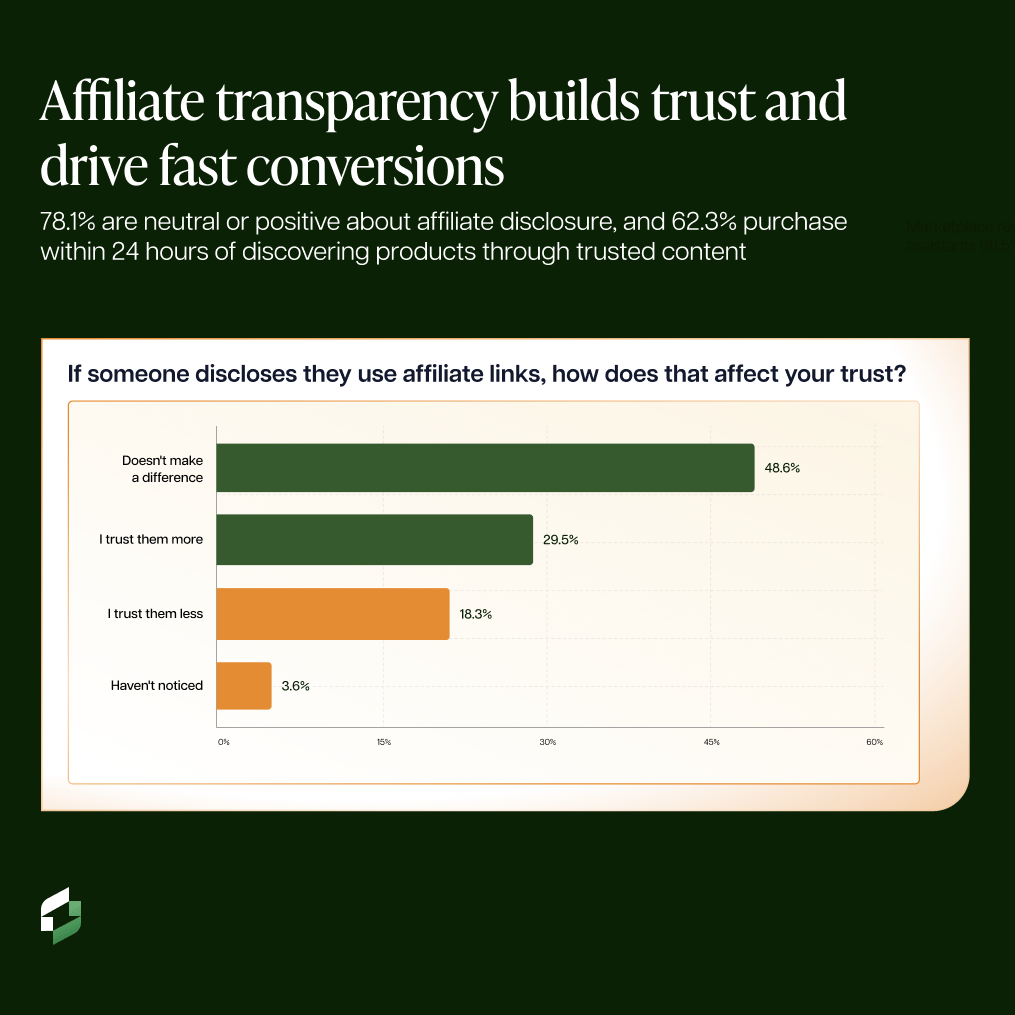
When consumers see an affiliate disclosure:

  • 29.5% said they “trust them MORE”.
  • 48.6% said it “doesn’t make a difference”.

That’s a 78.1% green light from your customers to be transparent. Honesty doesn’t hurt trust; it reinforces it.

Trust = Speed

And here’s why that trust is the only metric that matters:

62.3% of consumers purchase within 24 hours of discovering a product through trusted content.

When a trusted creator eliminates hesitation, the path from discovery to conversion becomes instant.

The New Funnel: The AI-Affiliate Flywheel

This report confirms the new customer journey. It’s a 3-step ecosystem:

  1. AI (Research): “What are the best non-toxic air fryers?”
  2. CREATORS (Trust): “Let me find a YouTube review of that top-rated one.”
  3. MARKETPLACE (Conversion): “I’ll buy it on Amazon for the fast/free shipping.”

AI isn’t replacing your affiliate program; it’s making it more critical than ever.

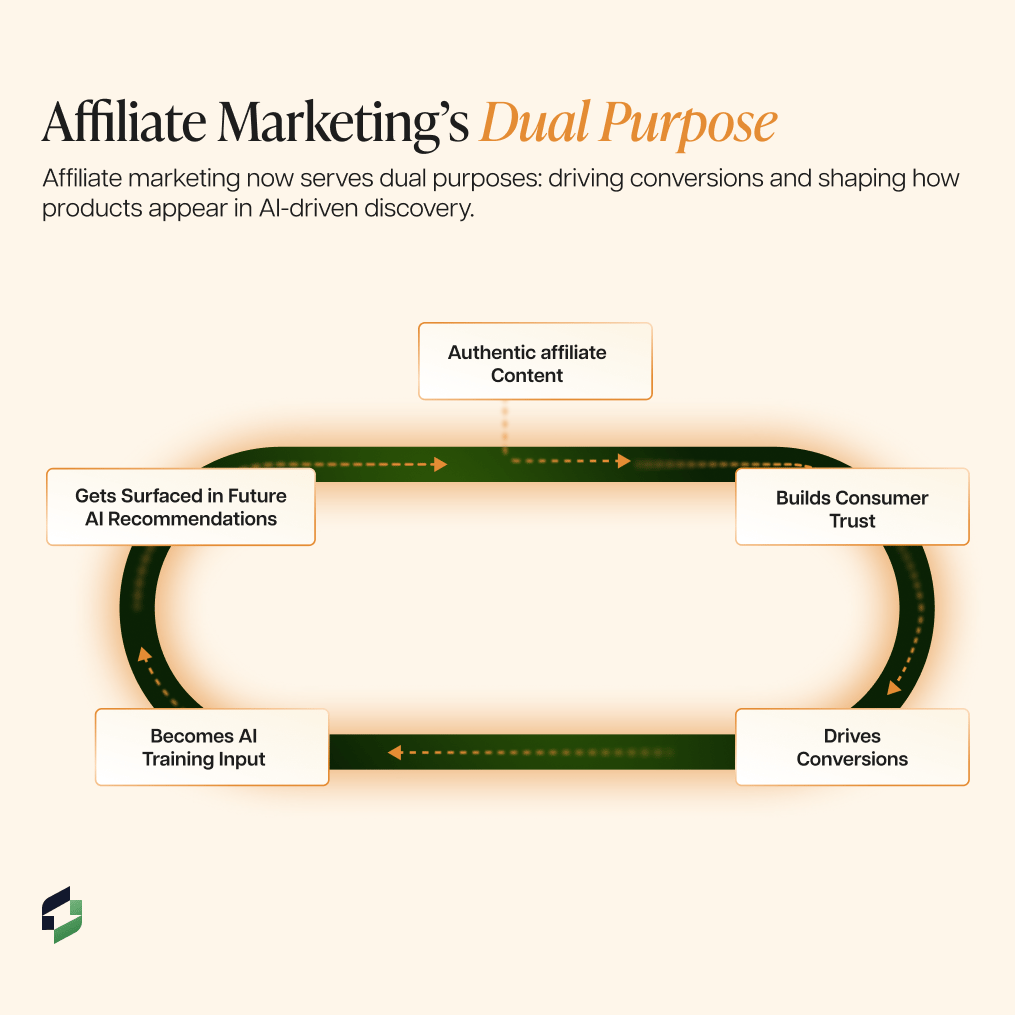
The AI is literally being trained on the authentic, human content from your best affiliates. That content builds the trust that drives the sale today, and it also surfaces your product in the AI-driven research of tomorrow. That’s the new flywheel.

This is just a fraction of the data. I’ve partnered with Levanta to get you the full 12-page report. It’s a must-read if you’re building a brand right now.

You can download the full AI Consumer Insights report here.

AI Consumer Insights report

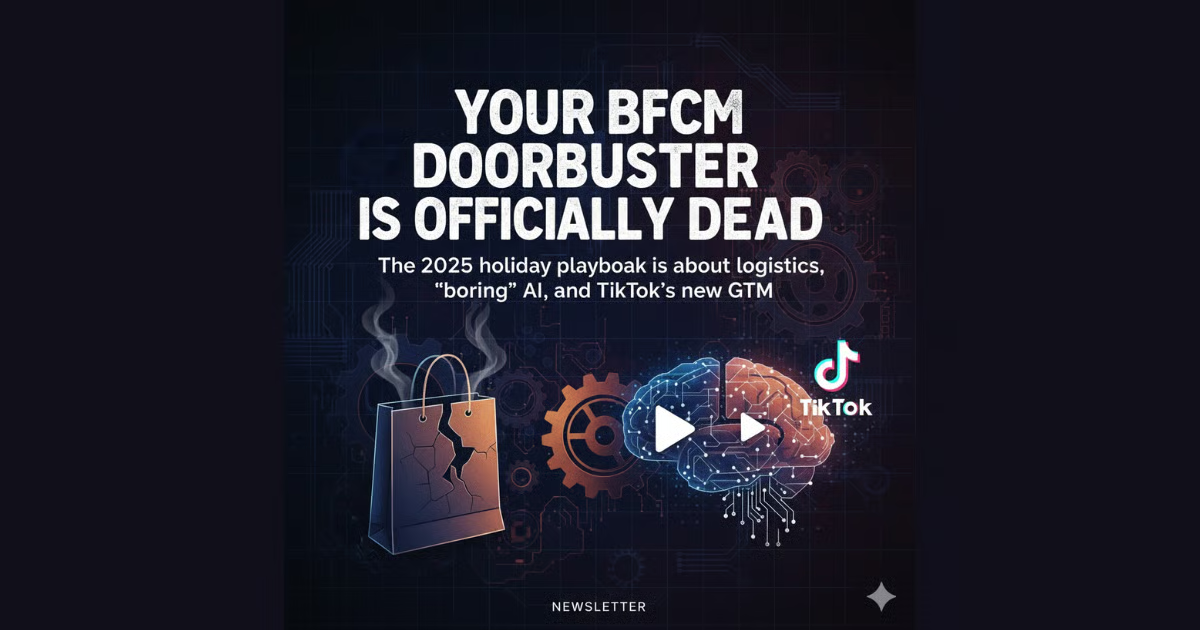
Your BFCM Doorbuster is Officially Dead

The “Black November” promotional marathon has officially killed the BFCM “moment.”

If you’re still banking on a single “doorbuster” deal to win Q4, you’ve already lost. Consumer “deal fatigue” is at an all-time high, and “doorbuster” listings are down 24% this year because the urgency is gone.

We’re in a “quarter-trillion dollar” paradox: a record $253 billion in projected online sales , built on the back of the most “cautious, budget-conscious, and value-driven shopper in recent memory”.

This is the “Value Hunter”—a consumer who is planning to spend more ($192 BFCM budget vs. $155 last year) but is operating with “stricter budgets”.

How is that possible?

1. The 2025 Holiday is Being Financed

This record-setting spend is only possible because of one tool: Buy Now, Pay Later (BNPL).

BNPL has graduated from a simple conversion lever to the primary “wallet stretcher” of the holiday season. It’s the only way a budget-obsessed shopper can justify a $192 cart.

Here’s the killer stat: Adobe forecasts that BNPL usage will grow +10.5%, while total e-commerce sales will grow +5.3%.

BNPL is growing at twice the rate of all online sales. This isn’t a trend; it’s mathematical proof that a massive chunk of this “record” holiday is being built on financed payments.

2. The Great Fulfillment Pivot

Since the early “deal” is now just commoditized noise, the only battleground left is “last-minute” fulfillment.

This is the new competitive front, and it’s a battle most DTC brands are guaranteed to lose. They simply can’t compete with Amazon’s logistics.

This leads to the most controversial and pragmatic pivot of 2025: DTC brands are actively promoting their Amazon storefronts to guarantee fast, “last-minute” delivery.

They’re making a painful, but necessary, trade-off: a low-margin, data-poor Amazon conversion is infinitely better than a high-margin, data-rich abandoned cart that fails the delivery promise.

For brands who can’t stomach that, the hybrid “Buy with Prime” integration is the only other viable path. The game is no longer about the discount; it’s about the delivery promise.

3. TikTok is Reimagining BFCM (And Winning)

While legacy retailers are in a race-to-the-bottom discount war, TikTok Shop is eating their lunch by building a completely new GTM.

The data is a “code red” for incumbents: in the first two weeks of November, while Amazon’s sales were “relatively flat” and Target’s fell 4%, TikTok Shop sales more than tripled.

Here’s how they’re doing it:

  1. The “Velvet Rope”: They’re poaching prestige, legacy brands. In a massive new push, Dyson, Kiehls, and Fenty Beauty are all launching on TikTok Shop, instantly legitimizing the platform as a prestige destination.
  2. The “Exclusive Drop”: They are shifting the consumer’s focus from “discounts” to “discovery.” TikTok is working with DTC brands to launch BFCM-exclusive products that are only available on their platform. Instead of discounting old inventory, brands are launching new inventory, manufacturing authentic, non-discount-based urgency.

4. The “Boring” AI That’s Actually Printing Money

All the hype around “sexy” Generative AI for ad creative is a distraction this holiday.

The real money is being made with “boring” AI.

The operators winning in 2025 are using a “friction reduction” toolkit.

  • The Conversational Concierge: AI chatbots are no longer just for “ticket surges”. They’re 24/7 “conversational concierges” that guide product discovery, promote deals, and answer conversion-killing questions like, “Will this ship before Cyber Monday?”.
  • The Conversion Accelerator: Tools like AI-powered Review Summaries are “incredibly powerful for speeding up the purchase decision”. They give shoppers instant social proof (“Shoppers love the ‘soft fabric’ (92%)”) without forcing them to read 20 different reviews.

Stop obsessing over generative creative. The real AI wins this Q4 are in “well-grounded” tools that reduce friction and build trust.

How an M&A Lawyer Hit 8-Figures With a 2-Person Team in DTC

Adventuring through the Canadian Rockies

I love talking to founders with “startup scars,” but what about “M&A lawyer” scars?

I sat down with Sam Coxe, the founder of Flaus. She’s not a dentist. She was an M&A attorney at Skadden, grinding in a “very, very high pressure, super intense” environment.

Her “aha” moment? A massive dental bill after admitting she was a “terrible flosser”. She went to buy an “electric flosser” and was “shocked to discover nothing like this existed”.

So she built it. And she built it into a monster.

Flaus scaled to eight figures in revenue with a two-person team. This is a masterclass in methodical disruption.

Here’s how she did it.

1. Start Selling a New Category

Sam’s core insight is brilliant. She knew she couldn’t win by just being a better product. She had to reframe the entire “stale” and “medical” category.

Legacy brands like Oral-B “have been around for decades… and they move so slow”. Her disruptive reframe? “Oral Beauty”.

She’s “helping people understand that not only is this medically important, but it’s also important for looking your best, feeling your best overall wellness and beauty”.

This is how you win against giants. She knows that “consumers, particularly Gen Z, Gen Alpha really want to feel that like authentic connection to the brand, the brand ethos, the brand story, the team”. Building that connection, she says, is “basically impossible for these large conglomerates to do”.

2. How an “Outsider” Built a Moat of Trust

As a lawyer, Sam had zero credibility in the dental space. She had to build it from scratch, and she attacked it on two fronts.

Pillar 1: Professional Validation (The “White Coat”)

  • Day One: “when I first came up with the idea… I immediately got two dentists involved… as well as an engineer… I kind of identified… my two biggest, weakest spots… and fill[ed] those”.
  • The GTM: She made dentists a core channel. “We go to about eight to 10 dental conferences a year,” which has “become its own revenue stream” as dentists “wholesale the product into their dental office”.
  • The Proof: “we just completed our first set of clinical trials… and the results are so positive… was found to be significantly more effective at removing plaque”.

Pillar 2: Cultural Validation (The “Stamps of Approval”) She systematically collected massive “stamps of credibility”.

  • The list is insane: “I was on Shark Tank last year, and then we were at Time’s Best Inventions of the Year, Fast Company… And then… Literally last week we were Oprah’s list of favorite things“.
  • She even knows who each stamp is for, noting that while Gen Z might say “Oprah who?”, that validation is critical for Baby Boomers with “fine motor dexterity limitations”. Her next move? QVC on Black Friday.

3. The “Methodical” Growth Ladder

The secret to her 2-person, 8-figure team? She wasn’t a “spray and pray” founder. She was “super methodical”.

First, she has the “consumable replenish” (the floss heads), which “makes us a little bit less reliant on… upfront acquisition” and lets her “lean more into… retention”.

Then, she followed a precise growth ladder:

  1. Step 1: “we started… with one color skew, one channel, nailed that, got my first million dollars“.
  2. Step 2: “And I was like, okay, a layer on Amazon… that blew up”.
  3. Step 3: “Then I was like, okay, let’s layer on two other colors“.

This discipline is her biggest advantage. “we are only on three channels… Meta, Google and Amazon. That’s it”. She sees competitors who are “also in retail” and “doing Tik Tok,” but Flaus hasn’t “even… foray[ed] into any of that yet”.

That’s not weakness. That’s a roadmap.

A huge thanks to Sam for the masterclass. She’s proof that you don’t need to be an industry insider to win. You just need a better insight, a plan to build credibility, and the operational discipline to execute.

Your Tech Stack is Bloated

Adventuring through the Canadian Rockies

We audit a lot of P&Ls.

And right now, the “Software & Subscriptions” line item is out of control for most brands.

We are seeing Shopify stores doing $10M in revenue paying for 35+ different apps. It’s a “Franken-stack”, a mess of disconnected tools bleeding monthly recurring revenue (MRR) and creating a nightmare for the ops team.

How did we get here?

The Era of Unbundling (2019-2022) A few years ago, the philosophy was “best-in-class.” You wanted the #1 specific app for referrals, a different app for reviews, another for loyalty, and another for surveys. We unbundled the entire marketing stack into dozens of “point solutions.”

It worked when capital was cheap and growth was easy.

The Era of Consolidation (Now) In 2025, the pendulum has swung back. The “unbundling” created fractured data, bloated costs, and operational drag.

Now, we are seeing the “Great Re-Bundling.”

Smart operators are ruthlessly auditing their tech stacks. They are cutting the single-use tools and moving to unified platforms that handle multiple jobs. If an app only does one thing, it’s on the chopping block.

The 3-Step Audit If you haven’t looked at your app list in Q4, do this now:

  1. Export your App List: Highlight every app that costs >$300/mo.
  2. Check for Overlap: Do you have a loyalty app and a separate referral tool? Do you have a reviews app and a separate UGC collector?
  3. Consolidate: Look for platforms that can do 3-4 of these jobs in one place.

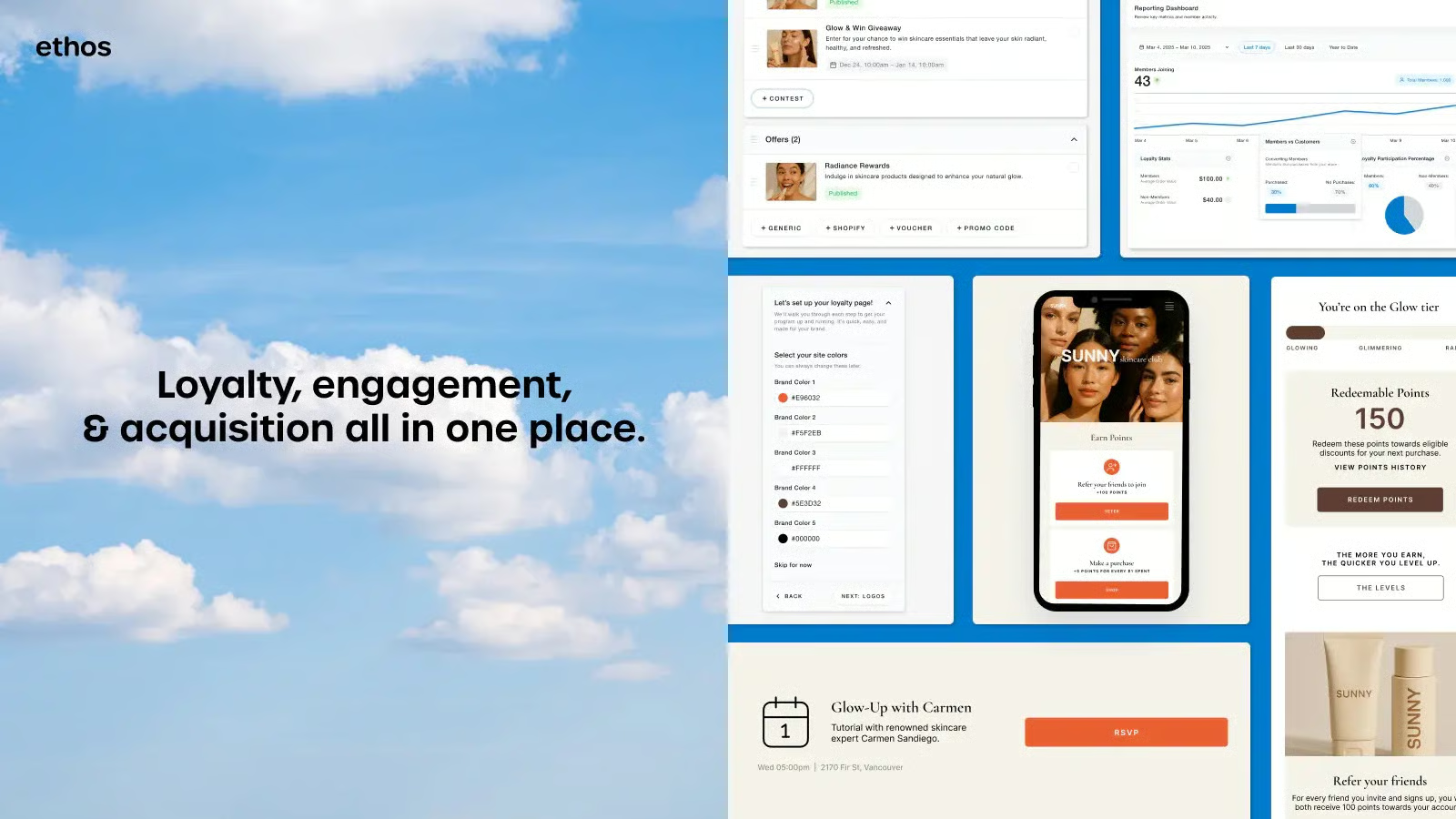
A Tool We’re Watching For the customer engagement side of the stack, we’ve seen a lot of brands switching to ethos to cut bloat. It’s a solid way to consolidate your loyalty, referrals, giveaways, and surveys into a single platform (and cut 3-4 other monthly bills in the process).

Check your stack. If you’re paying for 7 different apps to talk to the same customer, you’re doing it wrong.

Black Friday 2025: The $11.8 Billion Illusion

Consumer Growth Partners

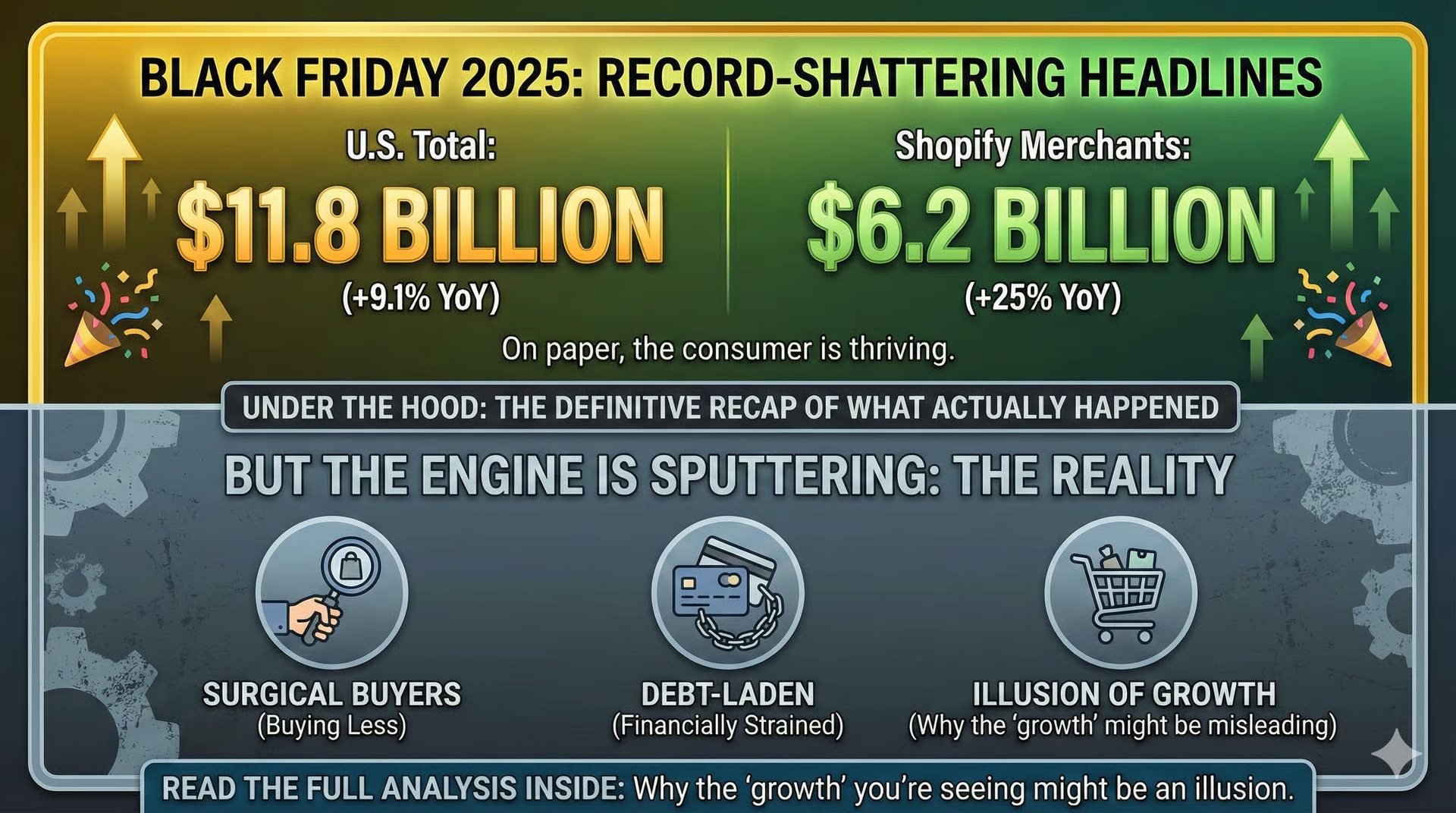
Black Friday 2025 just shattered records. But if you look under the hood, the engine is sputtering.

The headlines are celebrating an $11.8 Billion day in the U.S. (+9.1% YoY). Shopify merchants alone processed $6.2 Billion (+25% YoY).

On paper, the consumer is thriving. In reality, they are “surgical,” debt-laden, and buying less.

Here is the definitive recap of what actually happened last week—and why the “growth” you’re seeing might be an illusion.

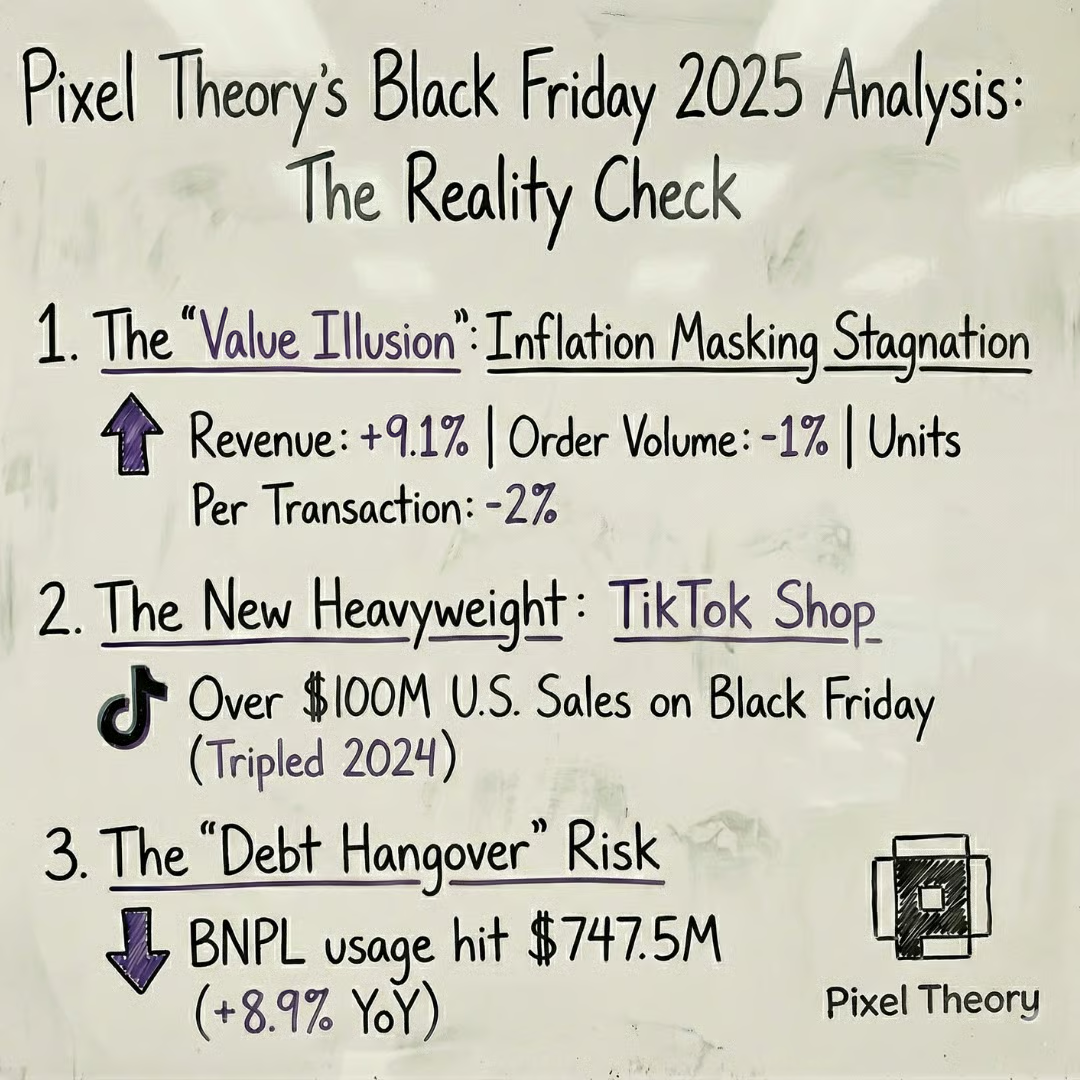
1. The “Value Illusion”: Inflation Masking Stagnation

This is the most critical insight for every founder and operator.

While top-line revenue soared, unit volume dropped.

  • Revenue: Up +9.1%
  • Order Volume: Down -1%
  • Units Per Transaction: Down -2%

The growth wasn’t driven by consumption; it was driven by price. The Average Selling Price (ASP) rose 7%. Consumers spent more money to acquire fewer goods.

The takeaway: If your revenue is up but your unit volume is flat, you aren’t growing. You’re just riding inflation.

2. The New Heavyweight: TikTok Shop

If 2024 was the arrival, 2025 was the coronation.

TikTok Shop generated over $100 million in sales in the U.S. on Black Friday alone—tripling its 2024 performance.

We witnessed a structural shift: social commerce moved from “discovery” to “conversion.” This wasn’t just viral dropshippers; legacy brands like Crocs, Fenty Beauty, and Medicube dominated the feed.

For DTC brands, the signal is clear: If you don’t have a TikTok Shop strategy for 2026, you are leaving 20%+ of your potential revenue on the table.

3. The “Debt Hangover” Risk

How did cash-strapped consumers fund this record spend? Debt.

Buy Now, Pay Later (BNPL) usage hit $747.5 million on Black Friday (+8.9% YoY).

This creates a massive risk for Q1. The consumer is borrowing from their future self. Expect a “spending hangover” in January as bills come due.

Strategic Learnings for Q1 2026

Consumer Growth Partners

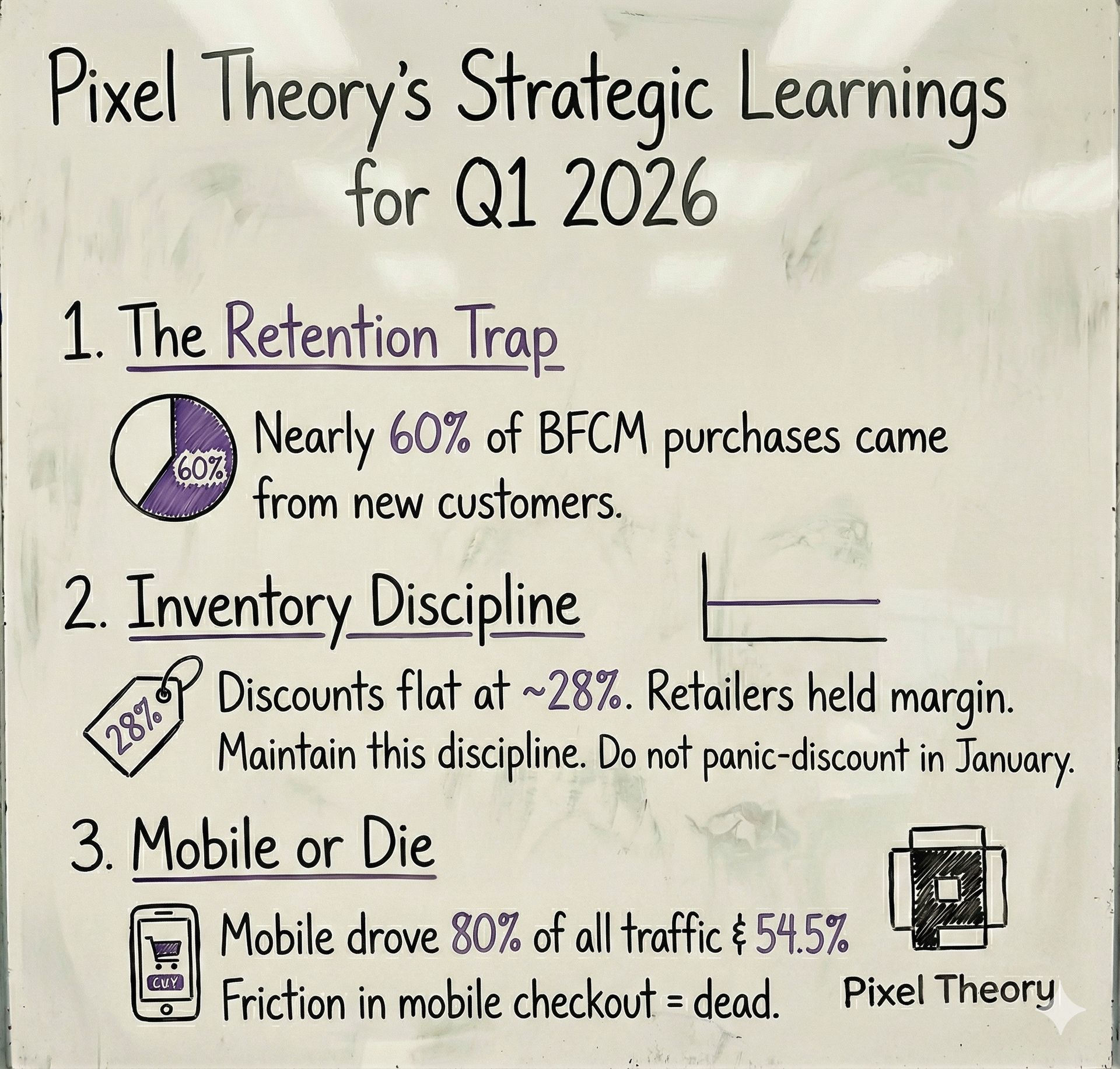
  • The Retention Trap: Nearly 60% of BFCM purchases came from new customers. Your primary goal for Q1 must be LTV. Segment these buyers immediately. If you don’t have a second-purchase flow ready, you will bleed CAC.
  • Inventory Discipline: Discounts remained flat at ~28%. Retailers held the line on margin. Maintain this discipline. Do not panic-discount in January unless you are sitting on dead stock.
  • Mobile or Die: Mobile drove 80% of all traffic and 54.5% of sales. If your mobile checkout has friction, you’re dead.

Black Friday 2025 proved the consumer is still spending, but they are doing it with surgical precision. The “easy money” era of arbitrage is over.

Efficiency and retention are now the only metrics that matter.

What to expect looking ahead to 2026

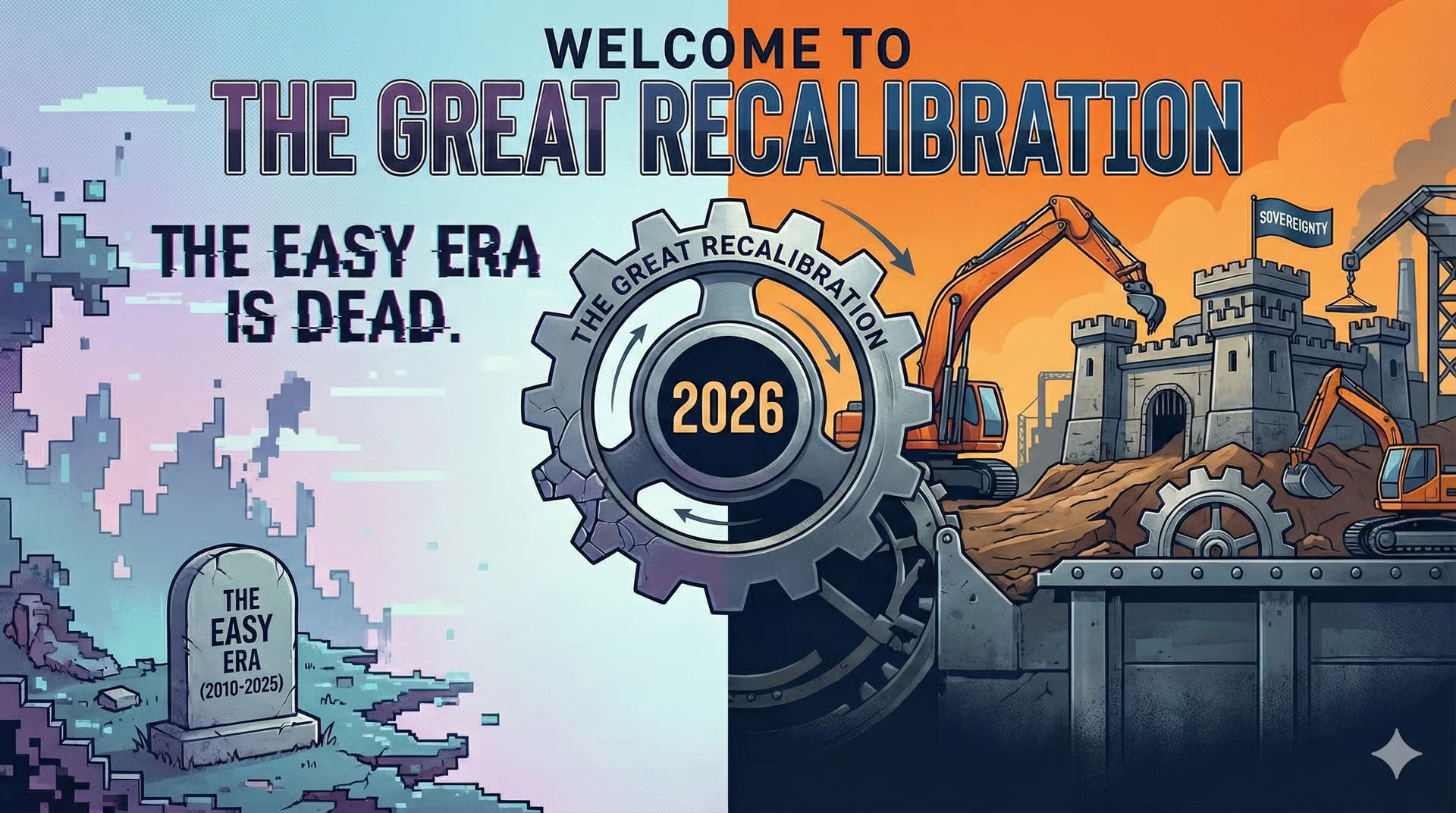
We have entered what I’m calling “The Great Recalibration.” The frictionless growth of the digital age has slammed into the hard friction of reality. In 2026, you can no longer rent your distribution, rent your logistics, or rent your solvency from a VC.

The mandate for 2026 is Sovereignty.

I just went deep into the strategic outlook for the next 18 months. Here is the executive briefing on how the physics of commerce are changing and how you need to rebuild your operating manual.

1. The Supply Chain: Tariffs Are Not a “Bug”

Stop waiting for tariffs to go away. They aren’t a geopolitical bargaining chip anymore; they are a revenue engine for the government.

Projections show customs duties will hit $60.3 billion in 2026. That is a massive line item in the national budget. When protectionism becomes a revenue stream, it becomes permanent.

The Operator’s Move:

  • Kill the “De Minimis” Dream: If your business model relies on the Section 321 loophole (shipping goods under $800 duty-free), you are walking on a landmine. Regulation is coming to close this gap.

  • Adopt “China Plus N”: The “China Plus One” strategy is outdated. You need a networked approach. Vietnam is congested, and Mexico is great for speed but lags in precision engineering. You need a portfolio, not a single alternative.

  • Inventory Shift: We are moving from Just-in-Time (JIT) to Just-in-Case (JIC). You can’t afford to run lean when supply chains are fractured.

  • Check Out Evana: The import duty optimization platform that is unlocking refunds for brands like Kenny Flowers, MeUndies, SquattyPotty and hundreds of other top Shopify & Amazon brands.

2. The Financial Reset: EBITDA is King

For years, we valued brands on a multiple of revenue. “Oh, you’re doing $10M top line? You’re worth $50M.”

In 2026, that math is obsolete. The market has reverted to the historical norm: Cash is reality.

Valuations have shifted decisively to EBITDA. A brand doing $50M in revenue with negative earnings is no longer a “unicorn” it’s a distressed asset.

The New Scoreboard:

Forget ROAS. It’s a platform-biased metric that lies to you. Your new North Star is Contribution Margin 3 (CM3).

CM3 = Net Revenue – (COGS + Fulfillment + Payment Processing + Variable Ad Spend + Variable OpEx)

If your CM3 isn’t hitting 20-30%, you don’t have a growth problem; you have a business model problem.

3. The “Anti-Algorithm” Movement

Here is the scary part for marketers: The algorithm is losing its juice.

Consumers are facing a “Trust Deficit.” They know the feed is manipulated, so they are retreating to “Dark Social” group chats, Discords, and Slack communities where pixels can’t track them.

While humans leave the feed, AI Agents are entering.

We are seeing the rise of “Agentic Commerce.” This is where a consumer tells an AI: “Buy me running shoes under $150 that are good for high arches.” The AI executes the transaction.

The Play:

  • SEO for LLMs: If ChatGPT or Perplexity can’t “read” your product specs via structured data, you are invisible.

  • Build “Third Places”: Since digital is noisy, the new luxury is offline community. Brands like Maia Active and Rothy’s are winning by hosting run clubs and pizza parties—building “brand glue” in the real world.

4. The Consumer: Trading Down & Splurging Up

The middle is dead.

We are seeing a massive bifurcation in spending. Consumers are trading down on essentials (buying private label paper towels) so they can splurge up on emotional goods (premium wellness, experiences).

If you are a “mid-priced, average quality” brand, you are in the death zone. You either need to be the cheapest option or the absolute coolest option.

The Takeaway: Build a Sovereign Brand

The winners of 2026 won’t be the ones who arbitrage cheap ads. They will be the “Full Stack” operators.

They will own their audience (email/SMS/print) so they aren’t renting from Meta.

They will own their supply chain so they aren’t destroyed by a single tariff.

They will own their financials by optimizing for profit, not just revenue.

The rising tide is gone. It’s time to learn how to swim.