



Hello There!

Pixel Theory is a growth partner and online advertising agency.

Follow Us

P I X E L T H E O R Y

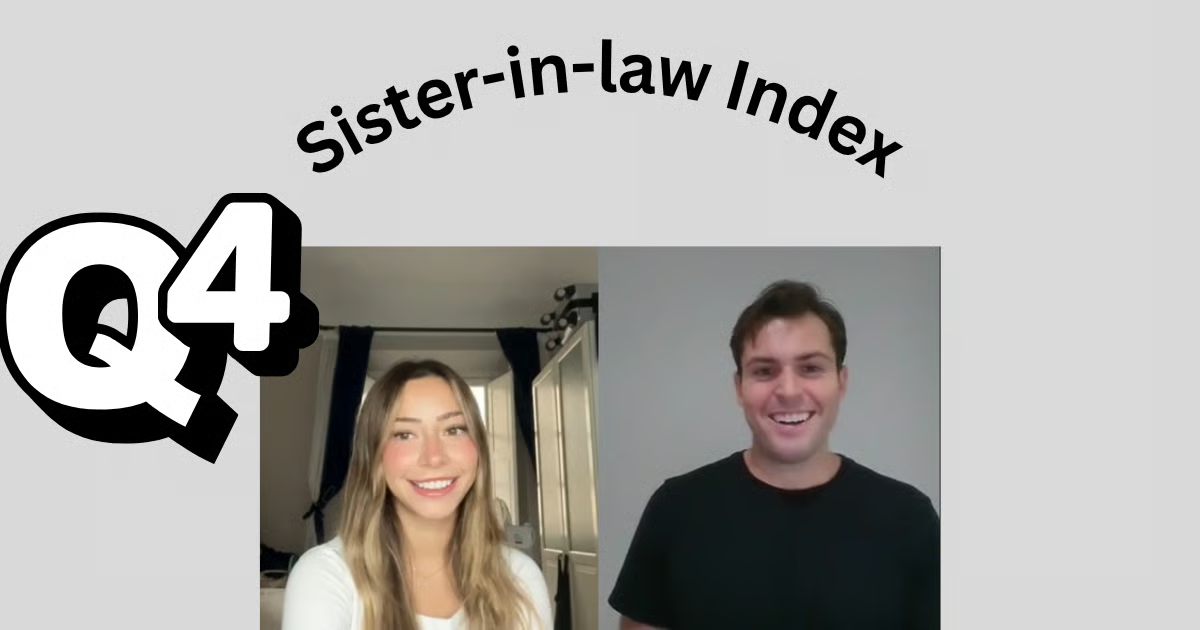
Biggest learnings from my sister-in-law (18 yr old)

Here are the biggest topics and insights I pulled from the conversation with my sister-in-law.

1. The New Discovery Engine: TikTok + ChatGPT

This is a massive new insight. While TikTok is still the “main thing” for discovery (like finding restaurants and shops) , ChatGPT is her new primary research tool. She and her friends “ask TikTok and chat.gbt everything”. This is a critical shift for brands, moving beyond just SEO and social to consider how they are recommended by AI.

2. The Holiday “Subtle Flex”

You asked how social media plays into holiday gifting, and her answer is the perfect snapshot of Gen-Z “flex culture.”

  • It’s a “Big Deal”: Posting gift hauls is “definitely a thing” and has moved from YouTube to TikTok .
  • The Shift: It’s no longer “serious” (like posting designer boxes). Now, it’s done in a “sarcastic way”.
  • The “Subtle Flex”: Being too flashy is “tacky”. The right way is an “aesthetic Christmas morning TikTok” that shows everything (the tree, food, gifts) without being an aggressive “haul” video.

3. The Influencer Trust Index

This is a goldmine for marketers. Her trust is built on authenticity and transferred credibility.

  • Narrative is Everything: She was “literally gonna go order” the Shark hydrofacial machine only because of Alex Earl. She trusts her because she has watched her authentic, multi-year “skin journey”.
  • Credibility by Association: She trusts Alex Earl’s recommendation more because Alex goes to a “viral doctor” that celebrities like Kendall and Hailey also use. The doctor’s credibility transfers to Alex, which then transfers to the product.
  • Aspirational Age: She and her friends trust influencers who are significantly older (e.g., Halle Kate, Acquired Style, who are in their late 20s). She doesn’t follow influencers her own age unless she knows them personally.
  • The Tacky Trap: She hates when “too every influencer” posts a brand, saying it becomes “overdone,” “tacky,” and “cheesy”. She’s more impressed by “low key but expensive” brands she’s never heard of.
4. The “Sister-in-Law Index” 2.0: The Rules Updated

This is a goldmine for marketers. Her trust is built on authenticity and transferred credibility.

  • Narrative is Everything: She was “literally gonna go order” the Shark hydrofacial machine only because of Alex Earl . She trusts her because she has watched her authentic, multi-year “skin journey” .
  • Credibility by Association: She trusts Alex Earl’s recommendation more because Alex goes to a “viral doctor” that celebrities like Kendall and Hailey also use. The doctor’s credibility transfers to Alex, which then transfers to the product.
  • Aspirational Age: She and her friends trust influencers who are significantly older (e.g., Halle Kate, Acquired Style, who are in their late 20s). She doesn’t follow influencers her own age unless she knows them personally.
  • The Tacky Trap: She hates when “too every influencer” posts a brand, saying it becomes “overdone,” “tacky,” and “cheesy”. She’s more impressed by “low key but expensive” brands she’s never heard of.

How an M&A Lawyer Hit 8-Figures With a 2-Person Team in DTC

Adventuring through the Canadian Rockies

I love talking to founders with “startup scars,” but what about “M&A lawyer” scars?

I sat down with Sam Coxe, the founder of Flaus. She’s not a dentist. She was an M&A attorney at Skadden, grinding in a “very, very high pressure, super intense” environment.

Her “aha” moment? A massive dental bill after admitting she was a “terrible flosser”. She went to buy an “electric flosser” and was “shocked to discover nothing like this existed”.

So she built it. And she built it into a monster.

Flaus scaled to eight figures in revenue with a two-person team. This is a masterclass in methodical disruption.

Here’s how she did it.

1. Start Selling a New Category

Sam’s core insight is brilliant. She knew she couldn’t win by just being a better product. She had to reframe the entire “stale” and “medical” category.

Legacy brands like Oral-B “have been around for decades… and they move so slow”. Her disruptive reframe? “Oral Beauty”.

She’s “helping people understand that not only is this medically important, but it’s also important for looking your best, feeling your best overall wellness and beauty”.

This is how you win against giants. She knows that “consumers, particularly Gen Z, Gen Alpha really want to feel that like authentic connection to the brand, the brand ethos, the brand story, the team”. Building that connection, she says, is “basically impossible for these large conglomerates to do”.

2. How an “Outsider” Built a Moat of Trust

As a lawyer, Sam had zero credibility in the dental space. She had to build it from scratch, and she attacked it on two fronts.

Pillar 1: Professional Validation (The “White Coat”)

  • Day One: “when I first came up with the idea… I immediately got two dentists involved… as well as an engineer… I kind of identified… my two biggest, weakest spots… and fill[ed] those”.
  • The GTM: She made dentists a core channel. “We go to about eight to 10 dental conferences a year,” which has “become its own revenue stream” as dentists “wholesale the product into their dental office”.
  • The Proof: “we just completed our first set of clinical trials… and the results are so positive… was found to be significantly more effective at removing plaque”.

Pillar 2: Cultural Validation (The “Stamps of Approval”) She systematically collected massive “stamps of credibility”.

  • The list is insane: “I was on Shark Tank last year, and then we were at Time’s Best Inventions of the Year, Fast Company… And then… Literally last week we were Oprah’s list of favorite things“.
  • She even knows who each stamp is for, noting that while Gen Z might say “Oprah who?”, that validation is critical for Baby Boomers with “fine motor dexterity limitations”. Her next move? QVC on Black Friday.

3. The “Methodical” Growth Ladder

The secret to her 2-person, 8-figure team? She wasn’t a “spray and pray” founder. She was “super methodical”.

First, she has the “consumable replenish” (the floss heads), which “makes us a little bit less reliant on… upfront acquisition” and lets her “lean more into… retention”.

Then, she followed a precise growth ladder:

  1. Step 1: “we started… with one color skew, one channel, nailed that, got my first million dollars“.
  2. Step 2: “And I was like, okay, a layer on Amazon… that blew up”.
  3. Step 3: “Then I was like, okay, let’s layer on two other colors“.

This discipline is her biggest advantage. “we are only on three channels… Meta, Google and Amazon. That’s it”. She sees competitors who are “also in retail” and “doing Tik Tok,” but Flaus hasn’t “even… foray[ed] into any of that yet”.

That’s not weakness. That’s a roadmap.

A huge thanks to Sam for the masterclass. She’s proof that you don’t need to be an industry insider to win. You just need a better insight, a plan to build credibility, and the operational discipline to execute.

Why This Founder Drove an Ice Cream Truck Around LA for a Month

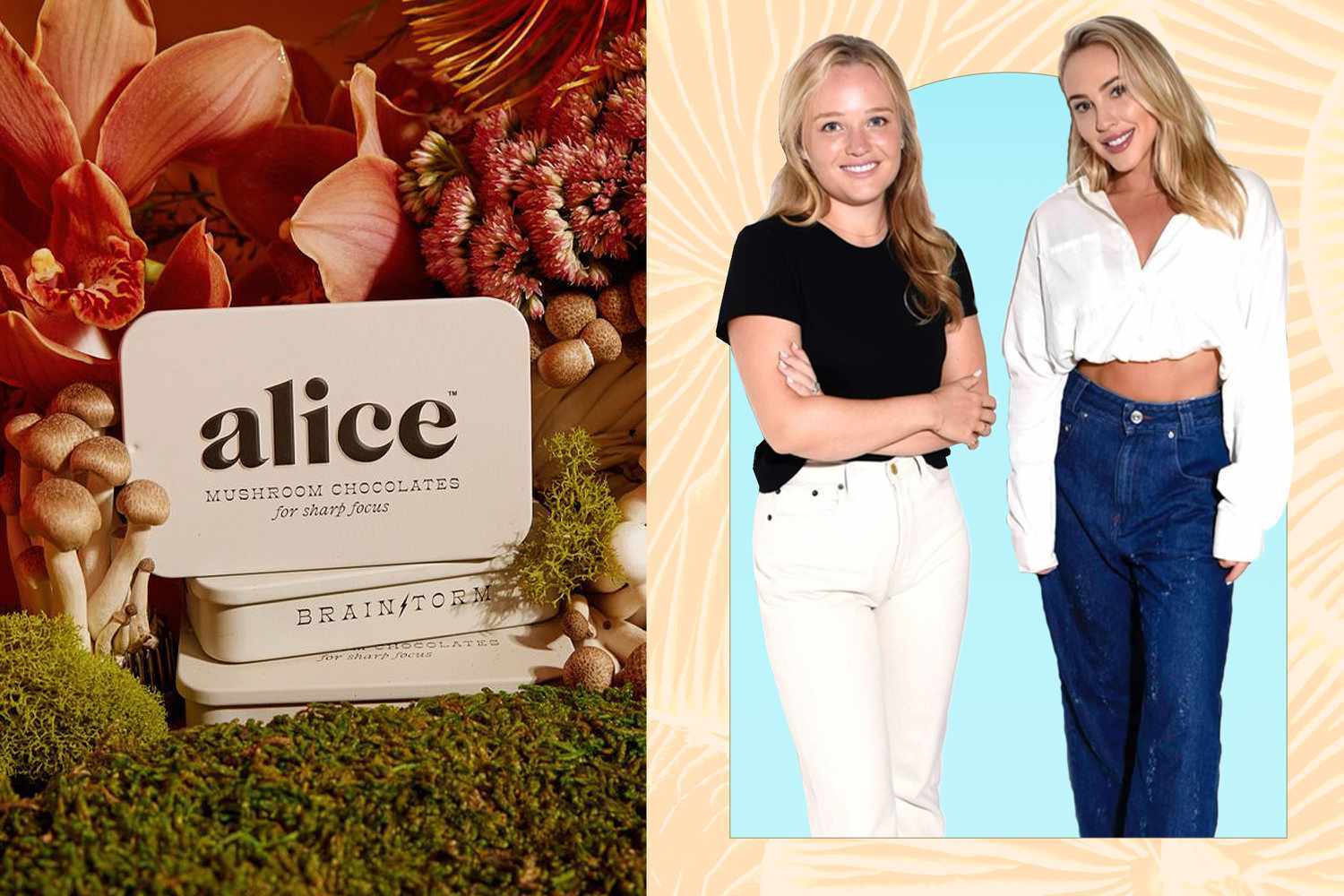
Functional Chocolate Brand Alice Mushrooms

I’m always skeptical of new supplement brands.

Is it a real product? Is it a drop-shipped white label from China? Does it actually work?

Charlotte, co-founder of Alice, knew this skepticism was her biggest hurdle.

She wasn’t a food scientist. She came from media, producing campaigns for luxury brands. But she saw a massive gap in the biohacking space: everything tasted like dirt.

“Choking down a powder” or taking a gummy full of sugar wasn’t the answer.

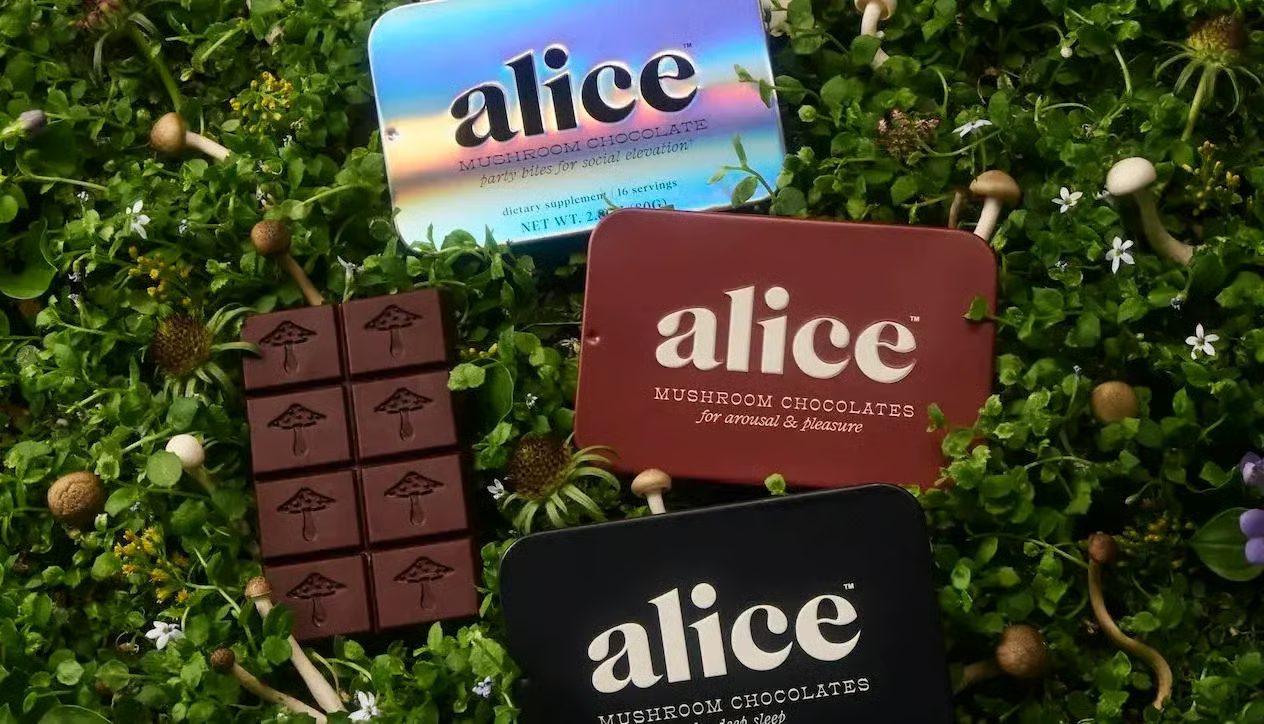
So she built Alice, a functional mushroom chocolate brand. And she’s scaling it by breaking every rule in the traditional DTC playbook.

I sat down with her to get the download. Here are the biggest takeaways.

1. The “Food as Medicine” Hack

Why chocolate? It wasn’t just about taste. It was about efficacy.

Charlotte dropped a stat that blew my mind: Nutrient Absorption.

Because digestion begins in the mouth (saliva and mucous membranes), food products can achieve 75–90% absorption. Swallowed pills? They often only offer 8–12%.

She didn’t just make supplements tastier; she made them work better by changing the delivery mechanism.

2. Combat Skepticism with Physical Proof

In a world of AI ads and faceless brands, how do you prove you’re real?

You buy a 1969 Chevy ice cream truck.

In April 2023, Charlotte and her co-founder drove that truck around Southern California for a month, doing over 30 events.

Why? Because online, everyone thinks you’re a scam. In person, you’re undeniable. They could hand someone a “Brainstorm” chocolate and, within 20 minutes, that person would feel the caffeine kick in.

That immediate feedback loop is something a Facebook ad can never replicate.

3. Brand First, Paid Second

Charlotte had a hot take on growth: “It is hard to retrofit brand.”

Too many founders try to build a business solely on performance marketing arbitrage. When CAC rises, they die because nobody actually cares about them.

Alice took the opposite approach. They focused on weird, high-signal collaborations to borrow equity and reach new audiences:

  • Pop Culture: A collab with HBO’s The Last of Us (leveraging the “cordyceps” connection).
  • Niche Lifestyle: A lingerie collab with Fleur du Mal and a fine jewelry line.

They built a brand before they leaned into paid spend.

4. The “Shoppy Shop” Retail Ladder

Alice just launched in Whole Foods and Target nationwide. But they didn’t start there.

Their playbook was methodical:

  1. Phase 1: Get into ~1,200 “cool shops”—the small boutiques that carry trendy brands like Graza and Fishwife. This built credibility and “seen everywhere” energy.
  2. Phase 2: Leverage that buzz to land mass retail.

And now that they’re in Target? They aren’t hiring a fancy retail agency. They’re literally just DMing influencers who specialize in “Target finds” and “Whole Foods hauls.”

Sometimes the simple, manual work is the highest leverage.

Check out Alice

Post-Click Results: Hume Health

How Pixel Theory’s Post-Click Team Delivered Nearly $12M in Incremental Revenue in 10 Weeks…

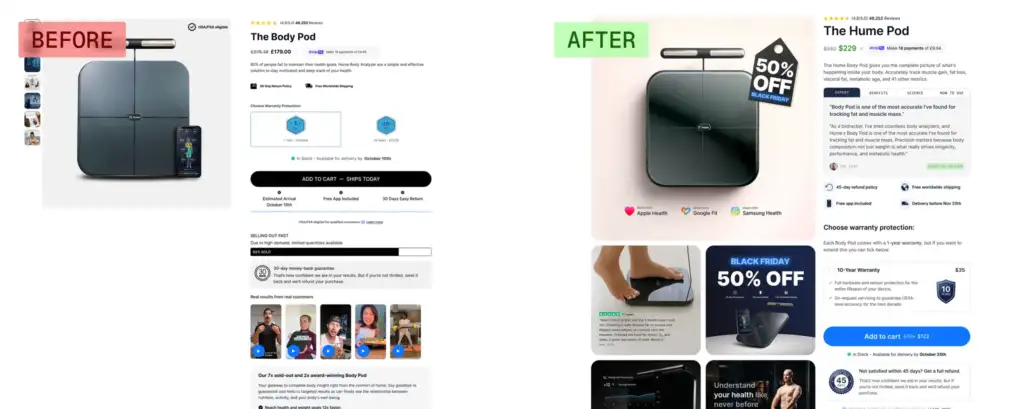
Buybox experiment for /pages/pdp3

📈 The Results

The redesigned buy boxes went live in early November. From November 24 through January 31 (69 days), we tracked two phases of impact: the BFCM surge and the post-holiday sustained lift. Together, they generated nearly $12M in incremental revenue from three page redesigns.

1️⃣ BFCM Peak (Nov 24 – Dec 8, 14 days)

ProductCVR IncreaseAdditional OrdersIncremental Revenue
Hume Pod+16.4%11,142$2,175,613
Hume Band+19.73%3,492$803,166
Total14,634$2,978,779

2️⃣ Post-BFCM Through January (Dec 9 – Jan 31, 55 days)

MetricProjected Result
Additional Orders42,390
Incremental Revenue$8,728,290 🔥
Avg Revenue per Order~$205.90

3️⃣ Combined

PeriodDurationIncremental OrdersIncremental Revenue
BFCM Peak14 days14,634$2,978,779
Post-BFCM55 days42,390$8,728,290
Combined Total69 days57,024$11,707,069 🚀

♟️ How Did We Manage This?

Our Research-First Approach

We started with depth, not speed. Week one was spent analyzing nearly 2,000 Pod customer surveys, almost 1,000 Band surveys, and over 1,600 live user insights, extracting the exact problems, emotions, and friction points that were costing Hume conversions:

  • For the Pod: People were plateauing hard. Weight wasn’t moving despite discipline, and they needed proof beyond the scale that fat was dropping and muscle was building. Main barrier? Skepticism that it was “just another smart scale” and unclear if it justified the premium price.
  • For the Band: Customers weren’t looking for another fitness tracker. They were exhausted from “doing everything right” without seeing results. They wanted to eliminate guesswork about recovery, energy, and whether their effort actually mattered. The big friction? Price skepticism and doubt about whether the data would be accurate enough to trust.

Prioritizing The Right Experiments

From those insights, we didn’t build 15 tests. We identified the highest-leverage experiments: recreating buy box sections (including product hero galleries) for their conversion pages. We rebuilt these sections around credibility (science-backed accuracy claims), clarity (showing what’s really changing in your body), and proof of progress (data that validates effort).

Then we got surgical. We excluded traffic segments that diluted results (like influencer traffic) and optimized in real time to ensure maximum revenue capture from the segments that mattered most.

Early November: new buy boxes launched and live before the traffic surge.

🤔 What Can We Learn From This?

That the difference between a good Q4 and a transformational one isn’t more traffic or deeper discounts. It’s knowing exactly what’s stopping your visitors from buying, fixing those specific barriers before your biggest sales period hits, and being ruthless about optimizing for the traffic that actually converts.

Most brands enter peak season hoping their existing pages will handle the surge. We proved that 7 weeks of strategic work, grounded in thousands of customer voices, can generate an extra $11.7M over 69 days. The research tells you what to build. The timing multiplies the impact. The real-time optimization ensures you’re not wasting conversions on traffic that doesn’t matter.

The question isn’t whether you can afford to do this. It’s whether you can afford not to. Because while your competitors are running the same promotions to the same pages, you could be converting at rates 16-20% higher across your entire peak window.

👉 What’s sitting in your customer feedback right now that could unlock your next eight-figure quarter? Book a brainstorm with us here

Appendices

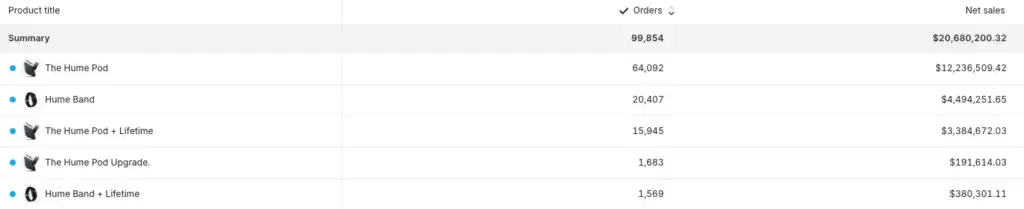
Appendix A: Orders & Sales (Nov 24 - Dec 8)

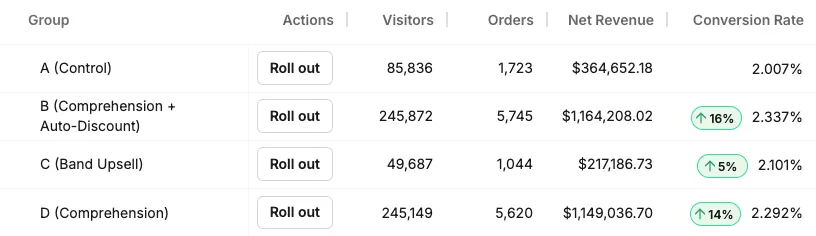
Appendix B: Experiment 001 Results: /pages/pdp3

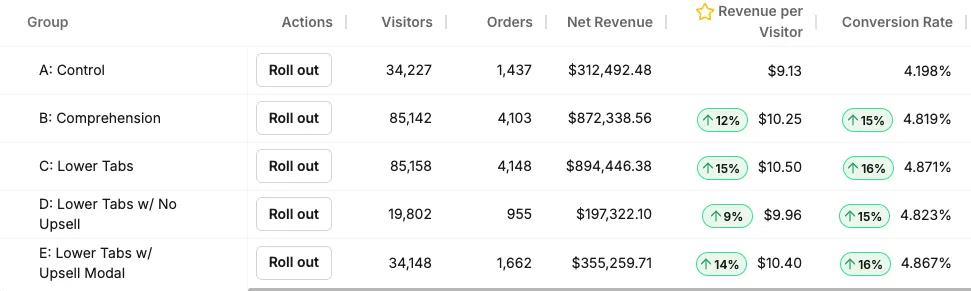
Appendix C: Experiment 002 Results: /pages/hume-body-pod

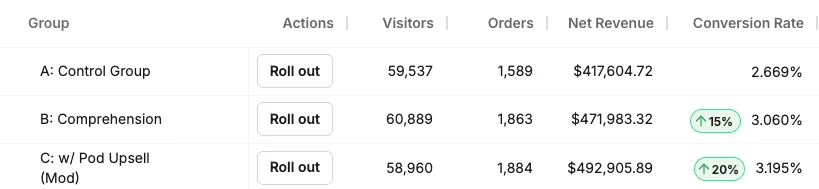
Appendix D: Experiment 003 Results: /pages/hume-band

We spent $500k on TikTok ads last month. Here’s the brutal truth.

Let’s get straight to it. TikTok is an absolute monster. With 1.5 billion users and a TikTok Shop ecosystem set to clear $20 billion this year, it’s not a channel you can ignore.

But the game just changed completely.

The past 60 days have marked a tipping point. TikTok basically fired you as a media buyer and handed the keys to its AI. If you’re still running things like you did in Q2, you’re about to light a ton of money on fire.

We just pushed over $500k through the platform under the new rules. Here’s the no-BS download on what actually works now.

1. The Black Box: TikTok’s AI Just Took Your Job.

The biggest shift is the mandatory move to “GMV Max.”

Think of it as a black box. You dump in your budget, your products, and your creative. The AI takes over everything else—targeting, bidding, placements. You get zero control and even less transparency.

The worst part? The attribution is a joke. TikTok is now taking credit for ALL shop sales that happen while your campaign is live, even if the customer never saw your ad. They’re counting your organic sales as their wins.

The takeaway: Your job is no longer about tweaking bids and audiences. You are now a strategic supplier to the algorithm. Your only job is to feed the AI a relentless stream of killer creative. That’s the only lever you have left.

2. The Unfair Advantage: Stop Making Polished Ads. Seriously.

If creative is the only lever, what kind of creative wins?

Not your slick, polished brand videos. Those are getting absolutely smoked.

The data is undeniable: the cheat code for TikTok is Spark Ads—promoting authentic, UGC-style videos directly from a creator’s account.

Check the numbers. Compared to standard ads, Spark Ads deliver:

  • +142% higher engagement rate
  • +134% higher video completion rate
  • +69% higher conversion rate
  • -37% lower Cost Per Acquisition (CPA)

This isn’t a small difference. It’s a total knockout. If you’re spending real money, continuing to run standard in-feed ads is strategic malpractice. You are literally choosing to pay more for worse results.

The takeaway: Your internal creative team needs to stop producing ads and start directing a portfolio of creators. Your affiliate program is no longer a sales channel; it’s your primary content engine. A minimum of 70% of your budget should be going to Spark Ads. Period.

3. The Grind: Creative Burnout & Account Roulette.

Scaling on TikTok is not for the faint of heart. It’s a brutal operational grind.

First, creative fatigue is relentless. An ad that crushes it one week will be completely dead the next. You need a high-velocity content engine just to stay afloat. If you don’t have a system for constantly sourcing, testing, and refreshing creator content, you can’t scale.

Second, the risk of getting your ad account nuked is real. The automated compliance bots are trigger-happy. Rapidly increasing your budget, a few rejected ads, or even changing a landing page can get you shut down for days, killing all your momentum.

The takeaway: You need a plan for when—not if—things break. That means having a deep bench of creator content ready to deploy and a squeaky-clean compliance process to avoid getting flagged.

Your New Playbook: The Only 4 Things That Matter

Forget the complexity. In this new TikTok era, here’s what you need to do to win:

  1. Feed the Beast. Shift your entire focus from campaign management to building a creative supply chain. Your #1 job is to supply the GMV Max algorithm with a constant stream of authentic, UGC-style video.
  2. Go All-In on Spark Ads. This is the single most effective lever you can pull. Mandate that at least 70-80% of your budget is dedicated to amplifying high-performing creator content.
  3. Build Your Own Scorecard. Don’t trust TikTok’s inflated numbers. Use post-purchase surveys and media mix modeling (MMM) to figure out what your true ROAS is. You have to measure the incrementality yourself.
  4. Don’t Get Nuked. Treat compliance like a core business function. Vet every piece of creative and have a contingency plan ready for when your account inevitably gets suspended.

The game isn’t about outbidding your competitors anymore.

It’s about out-creating them.